An away team made up of Jack O’Neill, Daniel Jackson, Rodney McKay, and the android version of Rommie has been dispatched to investigate a derelict freighter. After parking the puddle jumper in the ship’s hangar, the team discovers that the bay doors are jammed open to space, forcing a call on how to proceed. They follow Jack’s call.
The away team seals their helmets and exits into the airless bay. O’Neill cloaks their ride (just in case) and leads them to the interior airlock. Once it’s sealed behind them, McKay triggers repressurization. Air floods in and fogs on contact, vapor boiling off the frozen walls. A breathable foothold at last.
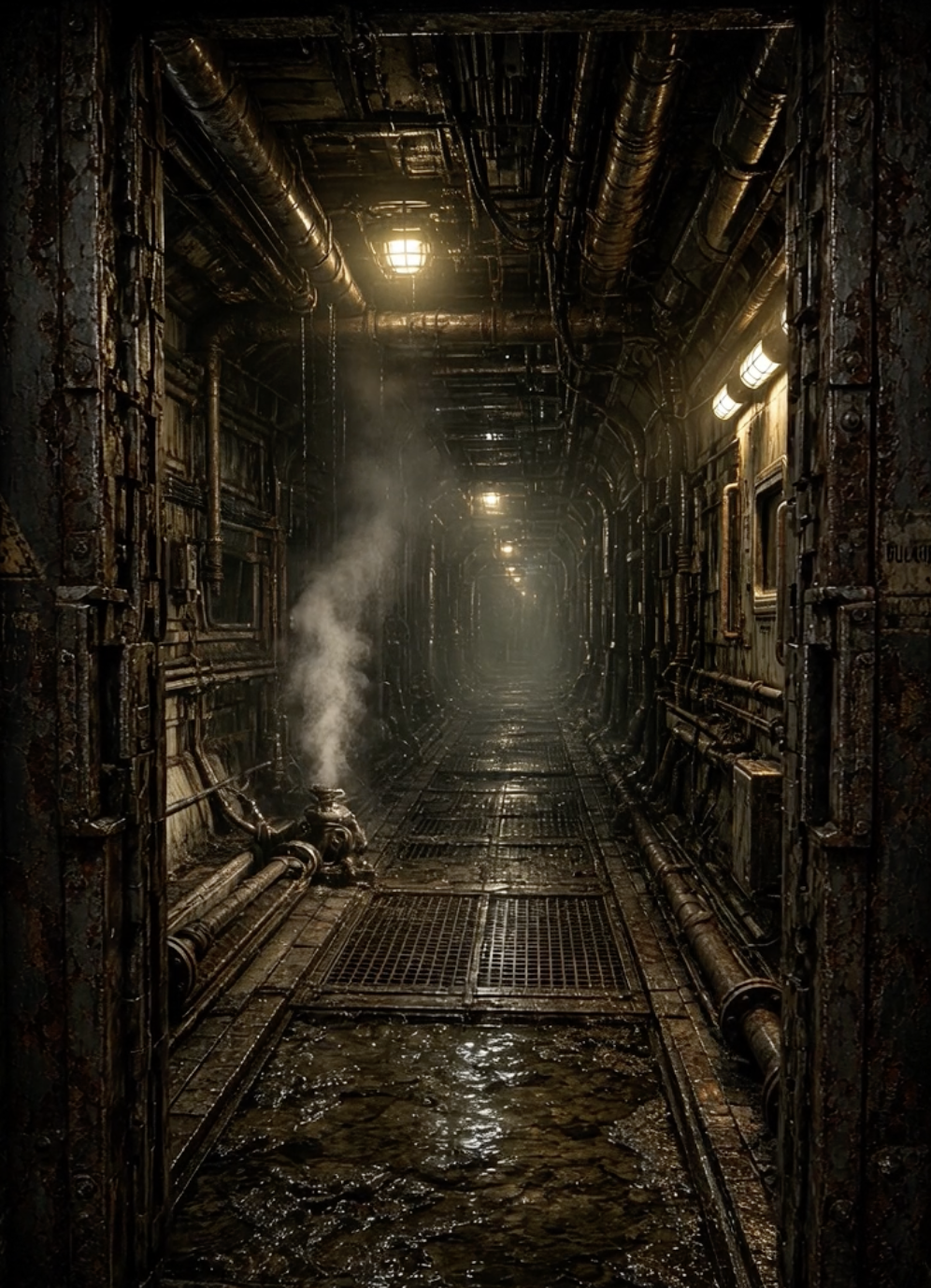
The pressure hatch ahead unseals into a corridor running through the freighter’s underbelly, an industrial sub-level, narrow and dank, pipes sweating and venting coolant into the dark.
“I think I’ve seen this movie,”notes O’Neill to no one in particular. “It doesn’t end well for Samuel L. Jackson.” Then, throwing a look to the others: “So where to?”
Rommie wants control before anything else. Waste no time in going straight to the bridge where they can immediately confirm that every breach is sealed and the entire ship secured before committing to anything deeper. The methodical call, it puts the freighter’s systems in their hands.
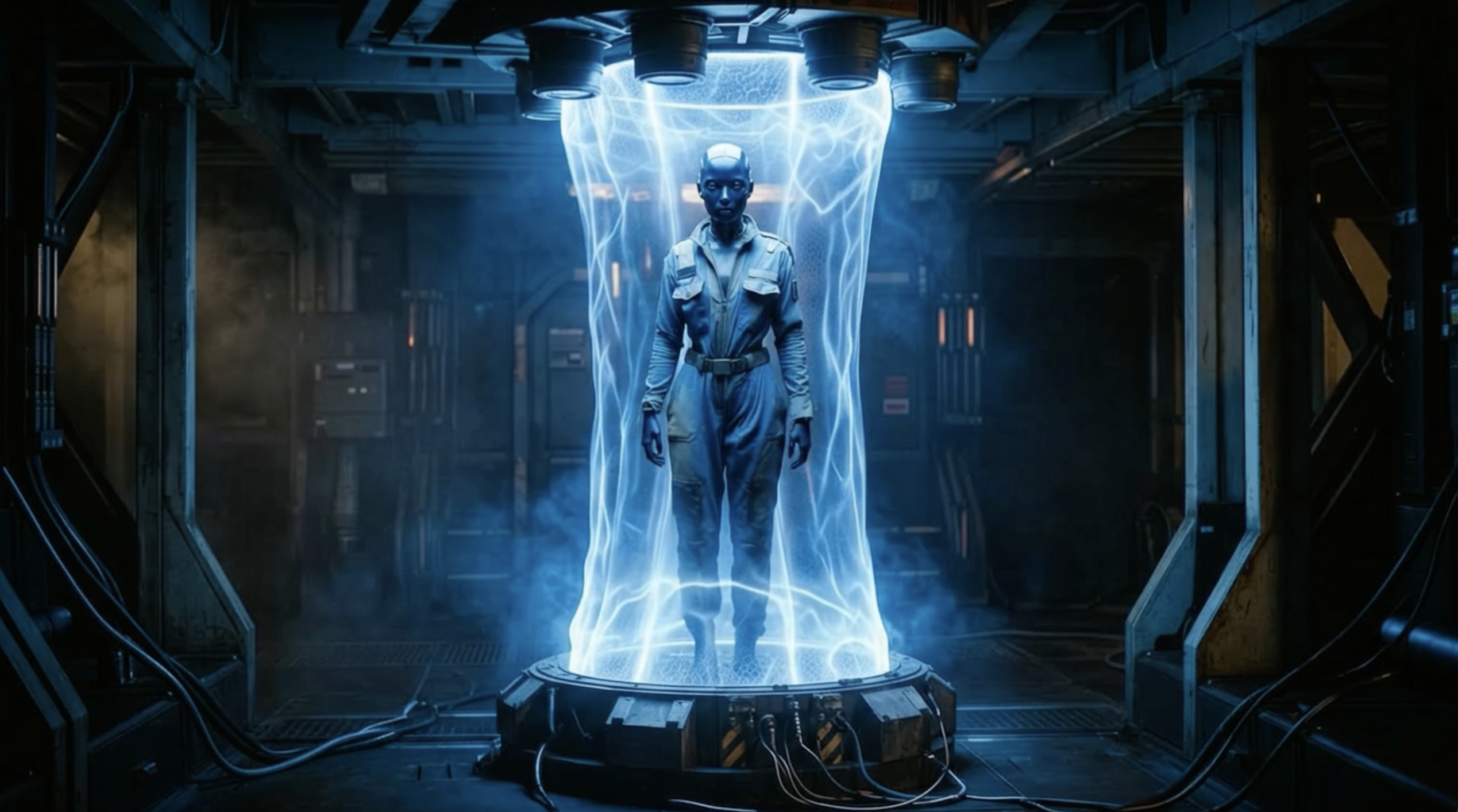
Daniel motions to his brand spanking new Starfleet-issued tricorder. A single faint contact flickers somewhere ahead – which should be impossible on a ship this dead. “Someone may be alive down here,”he says. “We have to investigate.”
“SomeONE or someTHING?”counters McKay who is wholly focused on his own tricorder, and another reading. The whole ship scans dark but for one compartment, still bleeding the last of a dying reserve to hold a localized containment field. When that power fails, the field fails, and whatever’s inside likely with it. He wants a look before that happens. “And it’s on the way,”he sells it. “Just a tiny detour; a slight delay.”
So where are you headed first?
CHOOSE!
PREVIOUSLY ON…
You and 19 others have been stranded in an amalgam universe of myriad SF realities. All 19 are sci-fi’s Best of the Best. And then there’s you, uniquely qualified given your encyclopedic knowledge garnered from your world where these characters, their technologies, and their stories are fiction, beloved t.v. shows you have watched time and again. Together, all 20 of you have set off on the Enterprise-D, tasked with finding a way home.
While you’re here, check out these essential works by some under-appreciated SF authors…

Phyllis Gotlieb
A pioneer of Canadian science fiction.
Sunburst (1964): A debut so influential that Canada’s Sunburst Award was later named after it, this novel follows a group of telepathic mutant children quarantined in a small town after a nuclear incident, exploring the promise and peril of human evolution.
A Judgement of Dragons (1980): Four linked novellas introducing the Ungrukh, giant red telepathic cats (aka the Starcats). Trust, diplomacy, and alien psychology are explored in the first tale that sees the cats stranded alongside a rabbi in pre-pogrom Europe.
O Master Caliban! (1976): A bio-punk take on Shakespeare’s The Tempest set on an isolated world given over to genetic experimentation. Four-armed Sven Dahlgren must face down the self-aware robots that have wrested control from his scientist father.
Flesh and Gold (1998): The opening novel of her Lyhhrt trilogy blends space opera with legal and diplomatic intrigue, as human and alien societies collide over questions of justice, culture, and co-existence.
E.E. Doc Smith
One of the fathers of modern space opera.
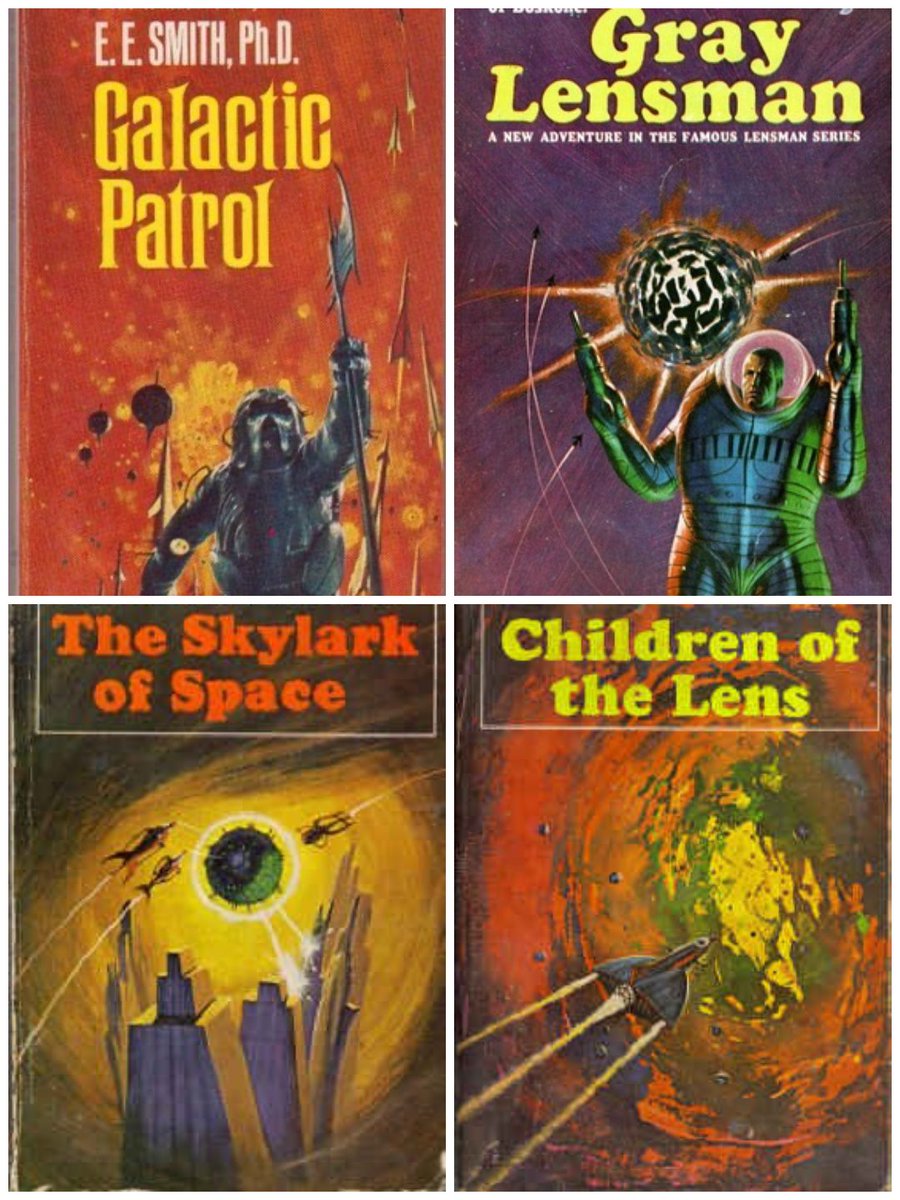
Galactic Patrol (1937–38): This novel revises and expands the 1937–38 serial, launching the main arc of the Lensman series as Kimball Kinnison rises through the Galactic Patrol in the war against Boskone. Psychic powers, colossal fleet battles, and galaxy-spanning stakes.
Gray Lensman (1939–40): Kinnison traces the enemy up the chain and discovers Boskone goes higher than anyone imagined in this fast-paced, high-stakes infiltration thriller.
Skylark of Space (1928): Co-authored with Lee Hawkins Garby, this groundbreaking novel is one of the earliest tales of interstellar travel, introducing faster-than-light propulsion. Richard Seaton and Martin Crane pursue the villainous Marc DuQuesne across the stars aboard the Skylark after he kidnaps Dorothy Vaneman.
Children of the Lens (1947–48): The grand finale of the original Lensman saga sees Kinnison’s superhuman children confront the ultimate enemy, bringing a two-billion-year cosmic war to its climactic conclusion.

Sterling E. Lanier
Best known as the editor who championed Dune after more than twenty publishers had passed on it—only to lose his editorial position at Chilton not long afterward.
Hiero’s Journey (1973): A telepathic warrior-priest rides a war moose across a mutant-infested, post-nuclear North America.
The Unforsaken Hiero (1983): The sequel to Hiero’s Journey expands the post-apocalyptic saga, deepening the alliances with intelligent animals and the war against the Unclean.
The Peculiar Exploits of Brigadier Ffellowes (1971): A whimsical collection of stories narrated by a retired British officer whose adventures involve everything from cryptids to the supernatural.
The War for the Lot (1969): His debut novel, a science fantasy in which a telepathic boy is recruited by the local wildlife to defend a patch of woodland against an invasion of intelligent city rats.




Leave a Reply