Olaf Stapledon
An English philosopher whose visionary fiction pioneered ideas such as genetic engineering, hive minds, and stellar megastructures that would come to be known as Dyson spheres.
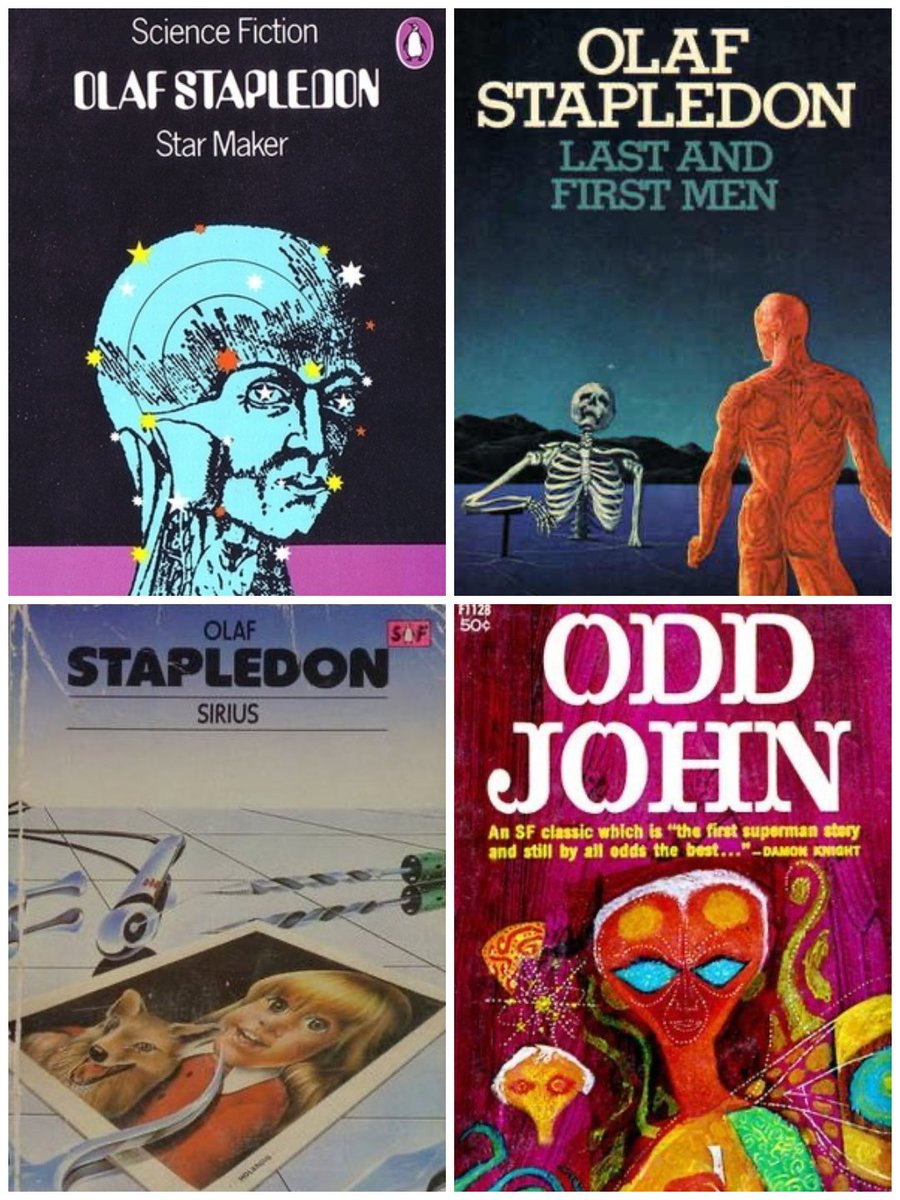
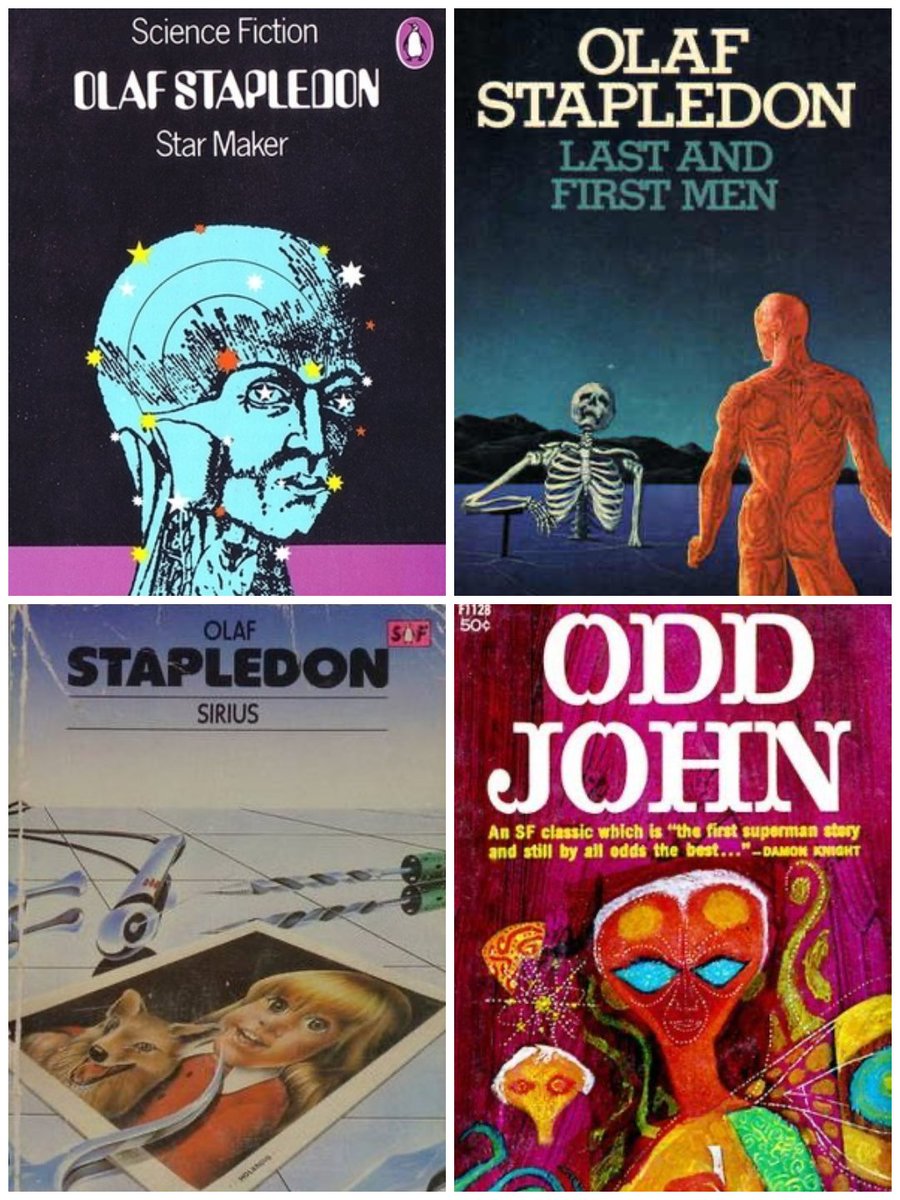
Star Maker (1937): Our human narrator undergoes a cosmic out-of-body voyage, joining minds with extraterrestrial intelligences to witness the birth, evolution, and death of the cosmos. A seminal work that influenced writers like Arthur C. Clarke, Stanisław Lem, Brian Aldiss, Stephen Baxter, and Alastair Reynolds.
Last and First Men (1930): One of the founding works of the future-history subgenre, it spans two billion years and 18 successive human species as they colonize and re-engineer planets, reshape their own genetics, and ultimately face cosmic extinction.
Sirius: A Fantasy of Love and Discord (1944): A sheepdog is given human-level intelligence and raised alongside a human girl in this moving novel exploring identity, love, and what it means to be human.
Odd John: A Story Between Jest and Earnest (1935): John Wainwright, a super-intelligent mutant, gathers other gifted prodigies to found an isolated colony, inevitably clashing with the rest of humanity. A major precursor to later “next stage of evolution” stories like More Than Human, Childhood’s End, and the X-Men.
John Varley
A three-time Hugo and two-time Nebula Award-winner.
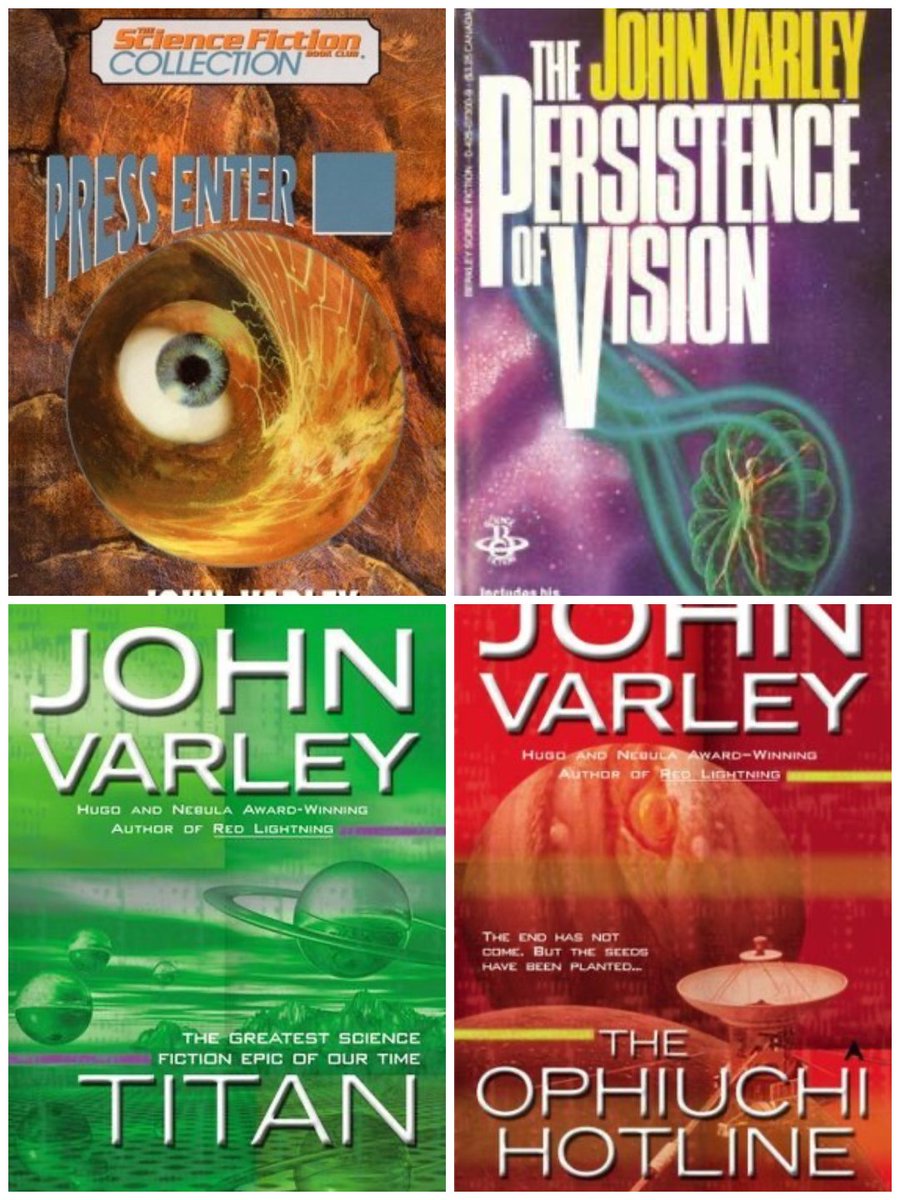
The Persistence of Vision (1978): Winner of the Hugo, Nebula, and Locus Awards, this novella is set in an isolated commune whose deaf-blind inhabitants have developed a non-verbal form of communication. A quietly powerful masterpiece.
Press Enter (1984): Another clean sweep of the Hugo, Nebula, and Locus Awards, this techno-thriller follows a recluse whose death unleashes a self-modifying computer program that threatens anyone who tries to investigate it.
The Ophiuchi Hotline (1977): The debut novel in his Eight Worlds universe is packed with big SF ideas involving cloning, memory recording, bioengineering, and body swapping.
Titan (1979): This novel launches his acclaimed Gaea Trilogy, following Captain Cirocco “Rocky” Jones as her crew discovers a living megastructure in orbit around Saturn. A story that truly captures the awe and wonder of discovery.
Miriam Allen deFord
A prolific writer of mystery, true crime, and science fiction.
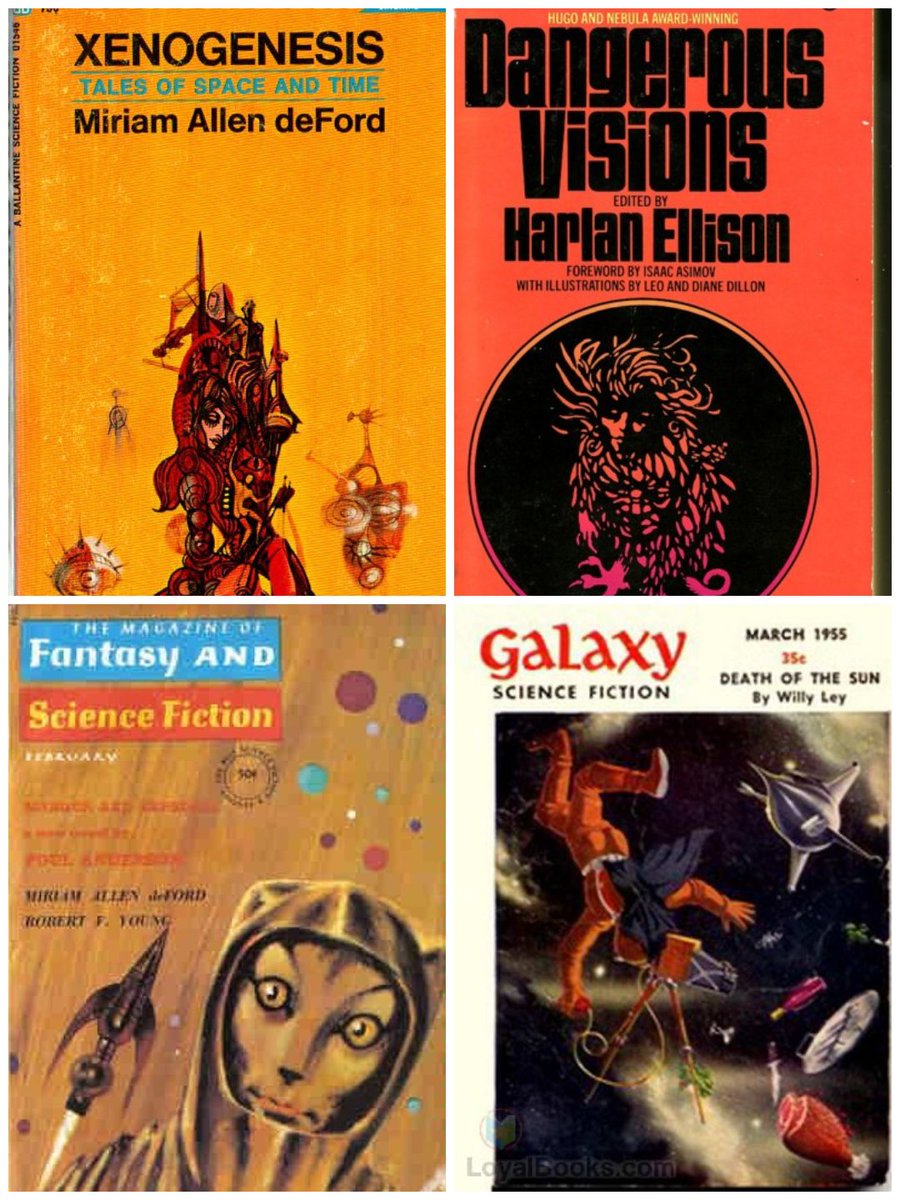
Xenogenesis: Tales of Space and Time (1969): Sixteen of her sharpest short stories, spanning the mid-1940s to the late 1960s.
“The Malley System” (1967): From Harlan Ellison’s landmark Dangerous Visions, this short story is set in a penal system that punishes violent criminals by forcing them to relive their own atrocities on an endless loop until their mind breaks.
“The Absolutely Perfect Murder” (1965): In a near-future where couples spend their evenings drugged and plugged into separate telecasts instead of speaking, a husband plots to kill his wife, blows his savings on a one-way trip to the past, and uncovers the secret that upends everything.
“One-Way Journey” (1955): Also published as “One Way.” In an overpopulated future, an elderly couple recalls the son they surrendered to a program that remade young volunteers into something inhuman and sent them forever to the stars.






Leave a Reply