

Whenever I peruse the menu at a local restaurant, I’m usually thinking: “What would I like to eat?”. On the other hand, whenever I peruse a restaurant menu in some other city, I’m usually thinking: “What would I like to eat?” and “When’s the next time I’ll be back here?”. In my mind, there’s nothing worse than a missed opportunity which is why, when I’m in a strange city, I tend to order an extra appetizer “for the table”, an extra main course “for the table”, and, more often than, every non-fruit-based dessert available. Such a strategy ensures that I get to sample as wide a range of plates as possible – short of ordering everything.
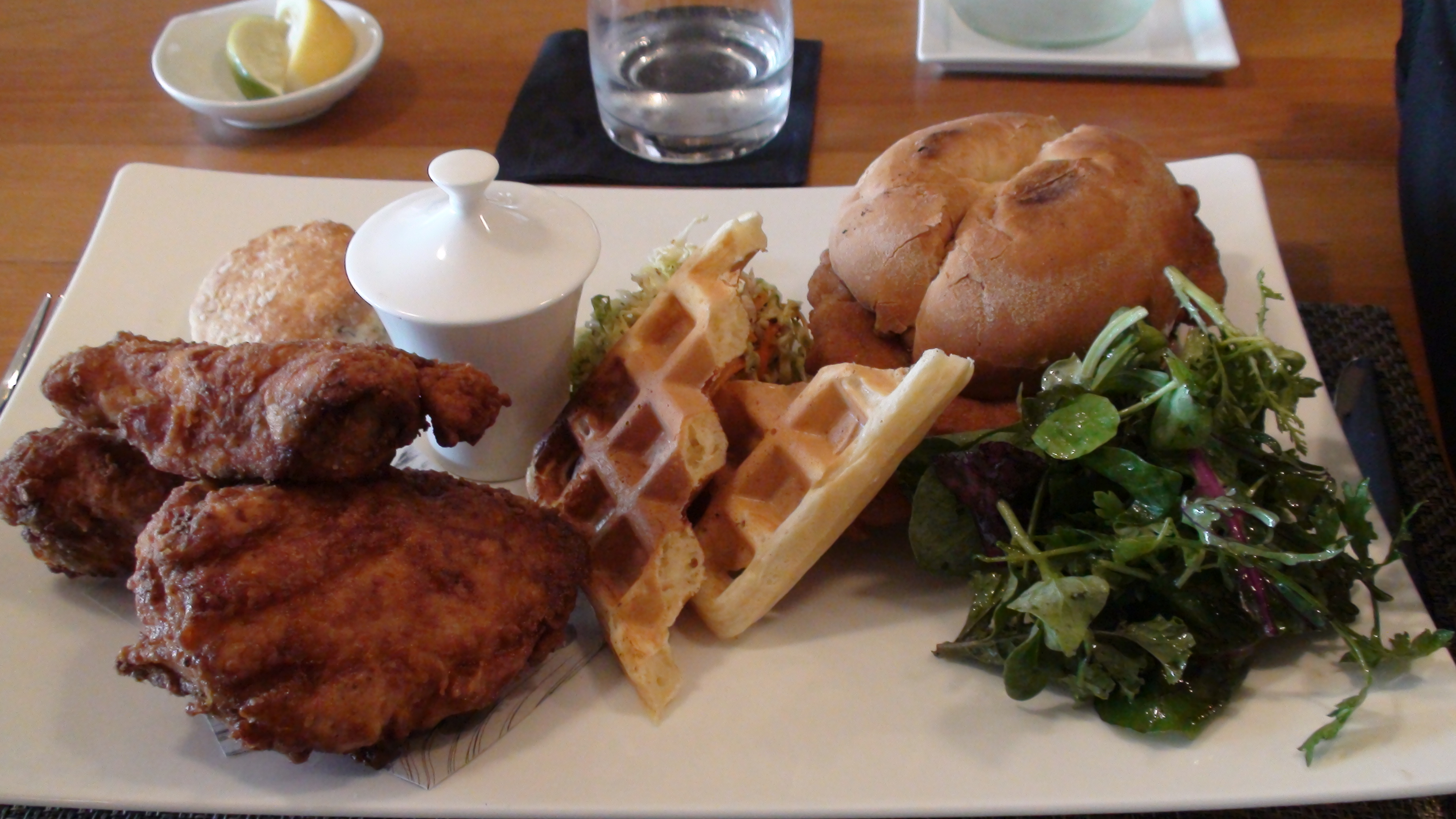
Like I said, it’s a dining approach usually reserved for my travels. However, there are rare occasions when I’ll apply it to one of my regular haunts. Like, say, last Friday’s lunch at Fuel. I’d been tipped off that September 26th would be the last day for Fried Chicken Fridays, so I stopped by to mourn its passing. Only problem was, even though I was looking forward to my final fried chicken Friday lunch, I really had a hankering for Fuel’s schnitzel sandwich. Rather than skip out on either, I opted for my own lunch combo: The fried chicken and schnitzel sandwich platter (pictured above).
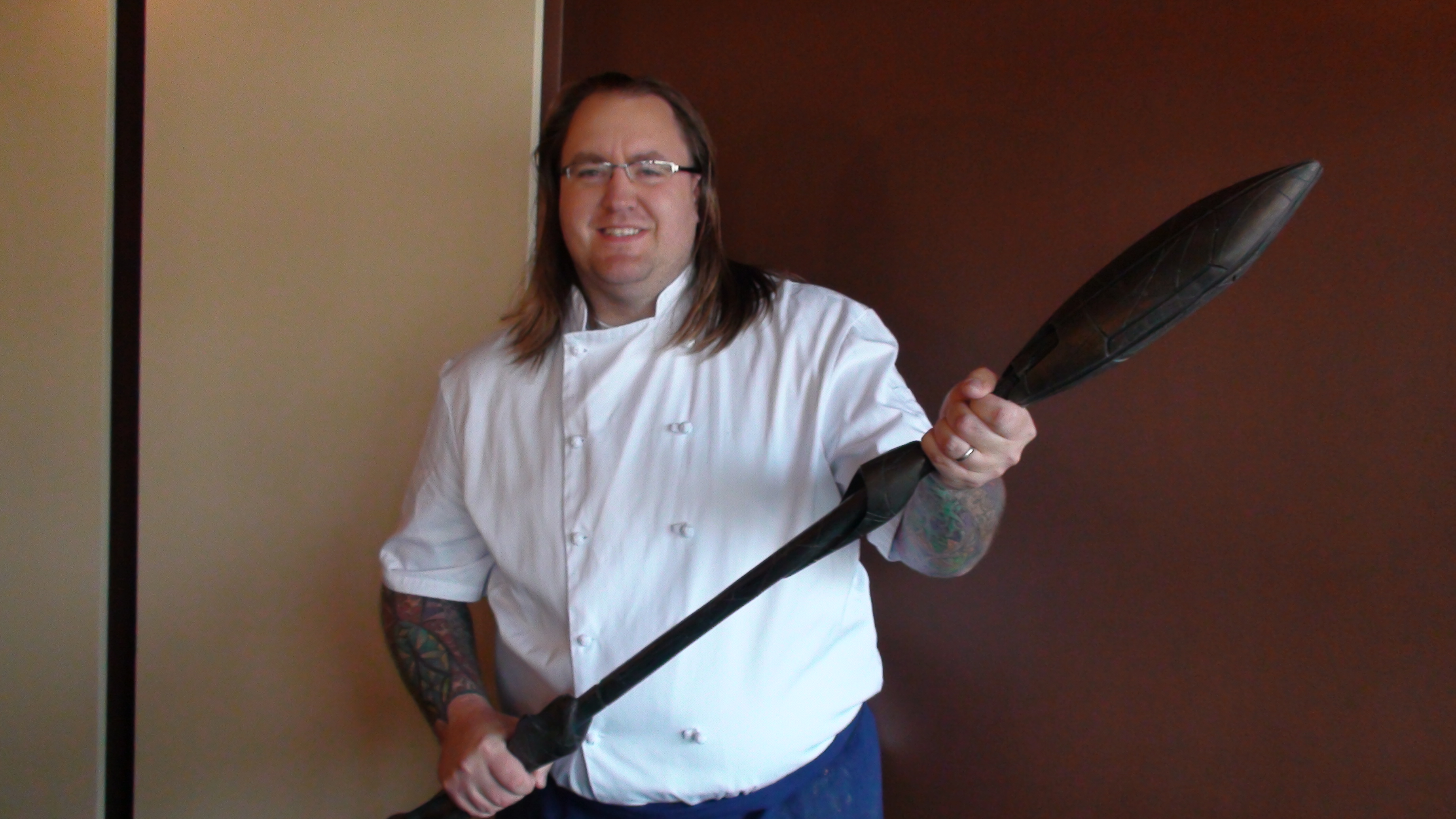
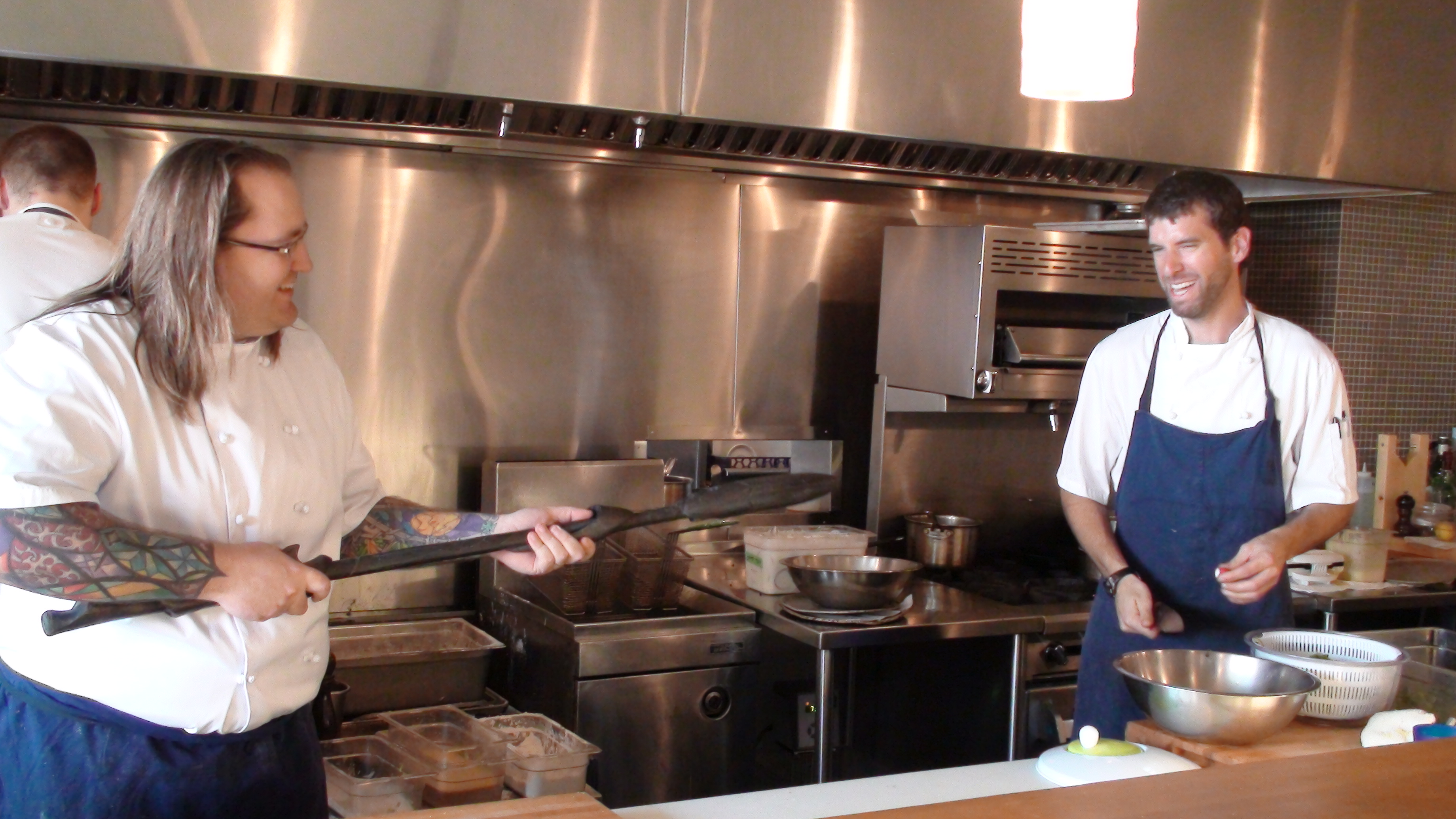
Anyway, regulars to this blog know that I talk up Fuel a lot because – well, in my estimation, it’s the best restaurant in Vancouver. And a lot of the credit for that goes to Chef Rob Belcham and his crack kitchen team. So who is Rob Belcham? You mean besides being a Stargate fan? Read on…
So tell us about Chef Rob. How’d he get his start? Where did he do his training? How did he end up at Fuel?
Chef B: I started cooking when I was about 11 years old. I started to see wonderful food being prepared on TV. Justin Wilson, Julia Child and Jeff Smith were some of the people who helped open this new world to me. I only knew how to make a few things at first, with my family as the cautious guinea pigs. As I grew older, I cooked for friends as well (Gumbo was my signature dish).
It was not until I turned 21 that I made the decision to pursue cooking as a profession. I went to cooking school in Victoria, at Camosun college. After the first 20 minutes of my first class I knew I wanted to be part of the food culture. I’d entered a whole new world and I never looked back. My first cooking gig was at Rebar Modern Food, Victoria’s famous vegetarian restaurant. I went there to challenge the skills I had learned in school where the dishes revolved around the meat with vegetables as a careless afterthought. I came to learn about how vegetables behave under different circumstances and how the flavors and textures change through the seasons. I came to embrace how vegetables can be used to enhance the protein element of a dish and how a protein can enhance a vegetable.
From there I went on to cook at the Aerie Resort, a Relais Chateaux resort and restaurant, on Vancouver Island at the top of the Malahat. This was my entry into the world of fine dining. Multi course meals, menu’s written and served on the same day, cooking from the herb garden behind the kitchen and, of course, all of the best meat and fish the Island had to offer. After a couple of years, I did a week long stage (i.e. worked for free) at the French Laundry in Napa California, which led to a job offer. It was an incredible opportunity and eye-opening learning experience. It was like going to the majors in baseball or being asked to play in the NHL. The biggest thing you see at this level is the immense determination among the cooks to do the best they can.
When I left the Laundry I needed a bit of a break (14 hour days will do that to you) and the few waking hours each day that I could spend with my wife were simply not enough, so I became a private chef in the booming bubble of the Silicon Valley. It was a great change of pace, but it really took me out of my element, the professional kitchen. I found myself in various kitchens dealing with kids and dogs and random guests. This was a departure for me as I was a foul mouthed cook and that had to stop immediately (except with the dogs). I did however, work for some really wonderful families and made some great friends.
My wife and I were ready to settle down and start our own family, so we moved to Vancouver to be closer to home. I started working as a Sous Chef for Robert Clark at C Restaurant and I became a Dad after my first summer there. I was the Chef De Cuisine after my second summer and continued on for another three (I also helped open Nu restaurant in 2005). It was Chef Clark who taught me how to be a chef and it was Harry Kambolis who inspired me to open my own restaurant. In the winter of 2006 Tom Doughty, C Restaurant’s sommelier, and I started construction on Fuel and we opened the doors on January 3, 2007. It was a long path, but I knew it was where I was meant to be.
Research is important. I remember hearing that you went to New York and, because of the limited time available and your desire to sample as much as the city had to offer, on some days you ended up having three different breakfasts, three different lunches, and three different dinners. True?
Chef B: I was in New York for 2 ½ days and ate at 18 different places. I had never been to the Big Apple before and had been reading about the restaurant scene for years so I went all in. From the basics, a burger and crinkle cut fries in Madison Square Park, to a lazy lunch at a 5 star restaurant, and everything in between. The amazing thing was that I did not even scratch the surface when it came to good food in New York. I cannot wait to go back.
(On a side note I just got back from 2 and a half days in Las Vegas where my wife and I hit eight restaurants.)
One of the things that I love about coming to Fuel is the kitchen’s willingness to experiment and try new things. Of all of the dishes you’ve created for Fuel, what has been your proudest accomplishment to date?
Chef B: This is a very difficult question as we change the menu all the time. I will say when I made my first really good batch of dry cured sopresseta, I was as proud as a first time Dad.
On the flip side, what has been the most memorable dish that didn‘t work out?
Chef B: We try new dishes on an ongoing basis. I can safely say that for every dish that makes it on the menu there at least 3 dishes that will never see the top side of a table.
The Queen of English is coming over for dinner. What will you be making?
Chef B: A simple roasted chicken.
Many celebrity chefs have cited early influences that helped shape their success. Who or what were your earliest culinary influences?
Chef B: I was raised in an environment where food was a bit of an afterthought. I do have some great early memories of trout fishing with my Father and Grandfather. I never thought of food as anything other than sustenance until I became a cook. Most of my influences came from eating as many different things as I could and working with some really great cooks. I will say it was Thomas Keller who helped me to understand the importance and appreciation of the raw ingredient; that each component was something to be revered and respected.
You’ve won an all-expense paid trip to anywhere in the world. Where are you going? And, more importantly, what are you eating?
Chef B: I have eaten my way all over the US, Canada, France and England (so far). I have learned it’s not about how many stars the critics have rated the restaurant, or who’s name is above the door; it’s about the love and honesty that the cook has put into the food that really counts. (With that being said I would love to eat every roadside Barbecue place from Kansas City to Houston to North Carolina.)
What’s your food philosophy?
Chef B: Take what Mother Nature has presented us and treat it in a way that allows the natural characteristics come shining through. Also, to bring ingredients together in such a way as to have the end product be much greater, and tastier, than the sum of its parts.
You’ve been invited to test your culinary mettle on Iron Chef America. What secret ingredient are you secretly praying for and which of the Iron Chef’s are you going to take on?
Chef B: I would love to do Battle Pork. My chef/combatant would, of course, be Mario Batali. Because I know we would have a good time afterward, no matter who won.
What’s with the tats? Is there some sort of connection between chefs and tattoos?
Chef B: I started getting tattoos before I became a cook. My sleeves came at a time when I was a private chef and I had the time and disposable income to dedicate towards getting them done. As for the connection between cooks and tattoos; they do cover burns and cuts quite nicely.



Leave a Reply