
John Christopher
The Death of Grass (1956): After a virus wipes out all grass and grain, John Custance leads a party north to his brother’s farm as society crumbles around them. A bleak and terrifying portrait of civilization in collapse.
The White Mountains (1967): The opening novel of the Tripods trilogy follows young Will and his friends as they flee toward the mysterious White Mountains to escape being enslaved by alien mind control.
The City of Gold and Lead (1967): The gripping second novel in the Tripods trilogy sees our heroes infiltrate the high-gravity city of the alien Masters, where they uncover the invaders’ true plans for Earth.
The Guardians (1970): Winner of the 1971 Guardian Children’s Fiction Prize, this dystopian tale is set in a future Britain divided between the crowded, high-tech “Conurb” and the aristocratic “County.” A quiet but powerful exploration of conformity, social control, and class division.
John Wyndham
The quintessential master of the “cosy catastrophe.”
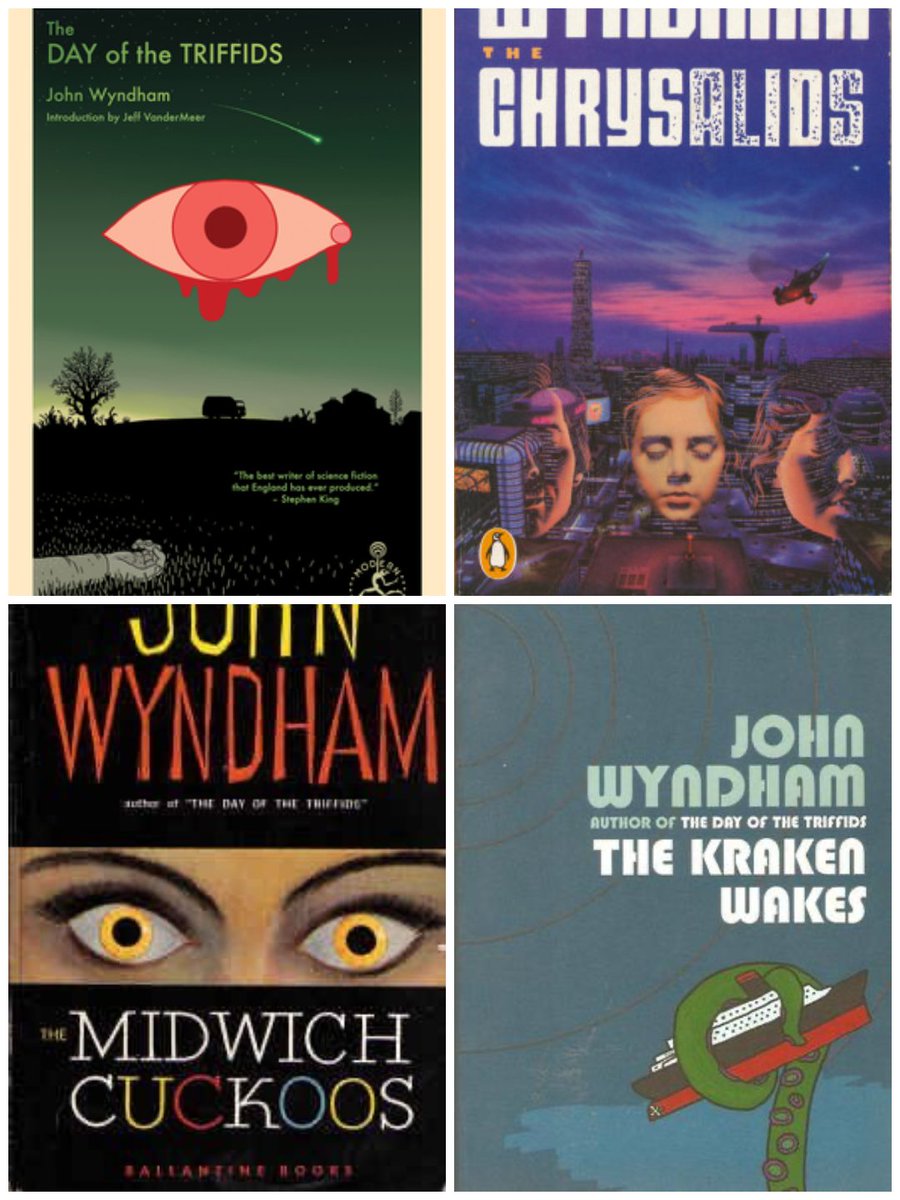
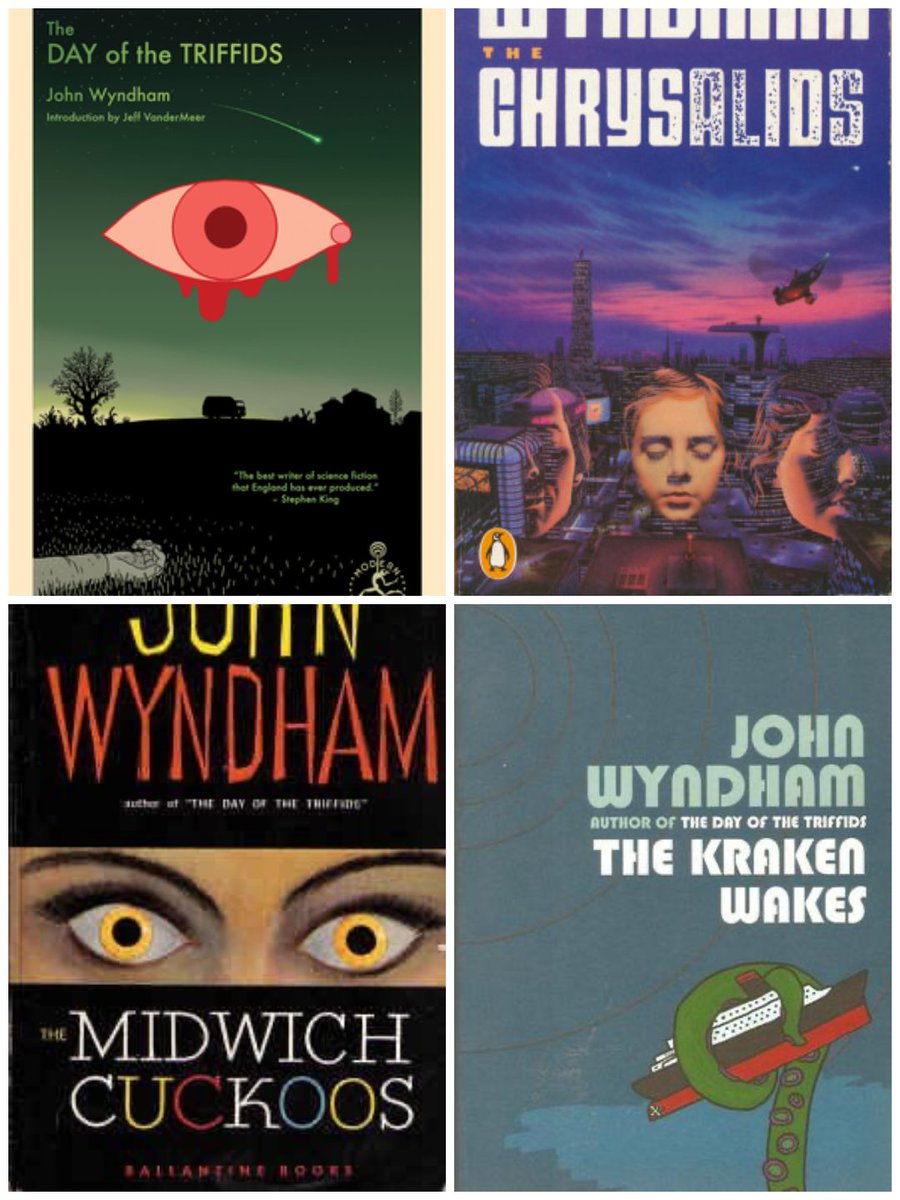
The Day of the Triffids (1951): One of SF’s most iconic novels imagines a post-apocalyptic world in which humanity, blinded by a mysterious celestial phenomenon, is hunted by deadly, possibly bio-engineered carnivorous plants.
The Chrysalids (1955): A group of children gifted with telepathy must hide their abilities from a ruthless, puritanical society committed to persecuting all genetic “deviants” in this coming-of-age dystopian thriller.
The Midwich Cuckoos (1957): After every woman of childbearing age in an English village mysteriously becomes pregnant, they give birth to golden-eyed, rapidly developing, telepathically linked children with their own agenda. A masterclass in quiet psychological horror.
The Kraken Wakes (1953): Mysterious underwater aliens trigger a worldwide ecological disaster in this wry exploration of media, politics, and human resilience.

Michael Bishop
A master of anthropological science fiction.
No Enemy But Time (1982): This Nebula Award-winning novel tells the story of a man who travels two million years into the past, where he bonds with a band of early hominins and eventually falls in love. A haunting exploration of identity, evolution, and loss.
Brittle Innings (1994): Frankenstein’s monster survives the nineteenth century and turns up playing shortstop for a minor-league baseball team in WWII-era Georgia in this Locus Award-winning, Hugo-nominated novel.
The Quickening (1981): Overnight, everyone on Earth wakes up to find themselves transported to a random location somewhere else on the planet. Bishop barely bothers with the how, and instead watches culture, faith, and identity buckle under the strain. A Nebula Award winner.
Transfigurations (1979): Expanded from the Hugo Award-nominated novella Death and Designation Among the Asadi, this novel follows anthropologist Elegy Cather to the planet BoskVeld, where she investigates her father’s disappearance while picking up his study of the Asadi, a maddeningly secretive alien species. One of science fiction’s finest anthropological novels.


Leave a Reply