
Kit Reed
A writer whose prose the New York Times Book Review once called “pure dry ice”—skeptical, precise, and deeply satirical.
Thinner Than Thou (2004): In a near-future America where the cult of the body has become the one true religion, the anorexic and the obese alike are handed over to the Dedicated Sisters—a convent order whose “cures” run to forced feeding and enforced starvation—while the Reverend Earl preaches the paradise of the “Afterfat.” A brilliant, unsettling satire of diet culture and the worship of appearance that only reads as more prescient today.
“The Food Farm” (1967): A heavy young woman is shipped off to a sinister reducing institution in this razor-sharp story of appetite, bodily control, and the tyranny of thinness—the clear ancestor of Thinner Than Thou, written nearly four decades earlier.
“Automatic Tiger” (1964): A timid man buys a lifelike mechanical tiger and finds it lends him status and nerve—until it doesn’t. A poignant, faintly sinister fable about borrowed confidence and manufactured identity, and one of Reed’s most beloved stories.
“The Wait” (1958): A mother and daughter find themselves trapped in a surreal town governed by inexplicable local rituals. Reed’s very first published story remains one of her eeriest and most memorable.

Joanna Russ
A celebrated New Wave and feminist SF author.
The Female Man (1975): Four parallel women navigate alternate realities, from a stalled 1930s where the Depression never ended to a dystopian gender war. Humorous, inventive, and intellectually provocative.
We Who Are About To… (1977): After a spaceship crash on a barren world, survivors attempt to rebuild civilization. One woman fiercely rejects their forced repopulation plan in this bleak, uncompromising survival tale.
“When It Changed” (1972): Male astronauts arrive on Whileaway, an all-female world centuries after a plague wiped out men. Russ brilliantly subverts classic first-contact and “rescue” tropes.
Souls (1982): This Hugo Award-winning novella follows a brilliant medieval abbess defending her abbey against Viking raiders, seamlessly blending historical and speculative fiction.

H. Beam Piper
Renowned for his imaginative alternate histories, space adventures, and the beloved classic Little Fuzzy.
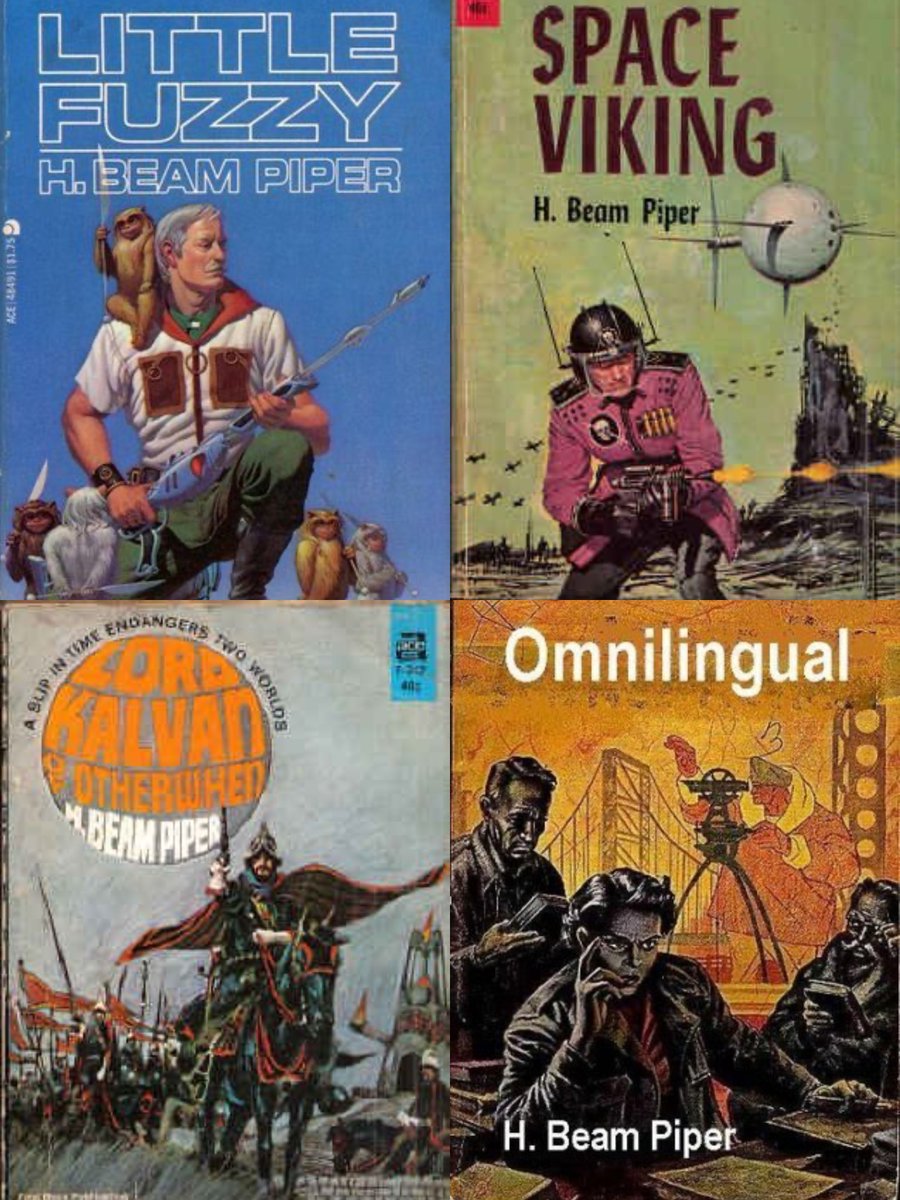
Little Fuzzy (1962): A warm, thoughtful exploration of identity and personhood, built around a courtroom battle to prove that a newly discovered alien species—the Fuzzies—are truly sapient.
Space Viking (1963): A fast-paced space opera that begins as a revenge tale before evolving into a sweeping meditation on feudal politics and the cyclical collapse of civilization.
Lord Kalvan of Otherwhen (1965): A Pennsylvania state trooper is accidentally transported to an alternate timeline where gunpowder is a closely guarded theocratic monopoly—a classic alternate-history adventure distinguished by its excellent military and economic world-building.
“Omnilingual” (1957): A human expedition attempts to decipher the written language of a long-dead Martian civilization in this ingenious scientific and linguistic detective story.




Leave a Reply