
John Brunner
His works ranged from pulp space adventures to provocative, socially conscious dystopian fiction.
Stand on Zanzibar (1968): Arguably one of the most influential SF novels ever written, this Hugo Award winner uses a mosaic narrative to explore an overpopulated, corporate-controlled Earth. It is eerily prescient in its depiction of wearable tech, genetic engineering, and mass shootings.
The Sheep Look Up (1972): A masterpiece of eco-fiction in which pollution, ecological collapse, and institutional incompetence push society towards total collapse.
The Shockwave Rider (1975): A foundational blueprint for cyberpunk written a decade before the sub-genre exploded. Set in a post-earthquake America where data is currency and privacy extinct, it brilliantly captures a populace drowning in the sheer velocity of technological change.
The Jagged Orbit (1969): This novel depicts a splintered United States divided along racial and ideological lines, its economy sustained by powerful weapons cartels. It remains a razor-sharp exploration of tribalism, media manipulation, and corporate-sponsored fear.

Judith Merrill
An eminent figure whose fiction helped redefine SF’s Golden Age and whose editorial vision helped usher in its New Wave.
“That Only a Mother” (1948): Merril’s debut is a devastating post-nuclear war short story told from the point-of-view of a young mother caring for a child mutated by radiation.
Shadow on the Hearth (1950): This groundbreaking novel pursues a similar theme, following a young suburban mother struggling to protect her daughters following a nuclear attack.
Daughters of Earth (1953): A multi-generational epic exploring the psychological toll of deep-space exploration as told through six generations of women.
“Dead Center” (1954): This tragic short story focuses on the emotional fallout on one family after a moon mission goes awry.

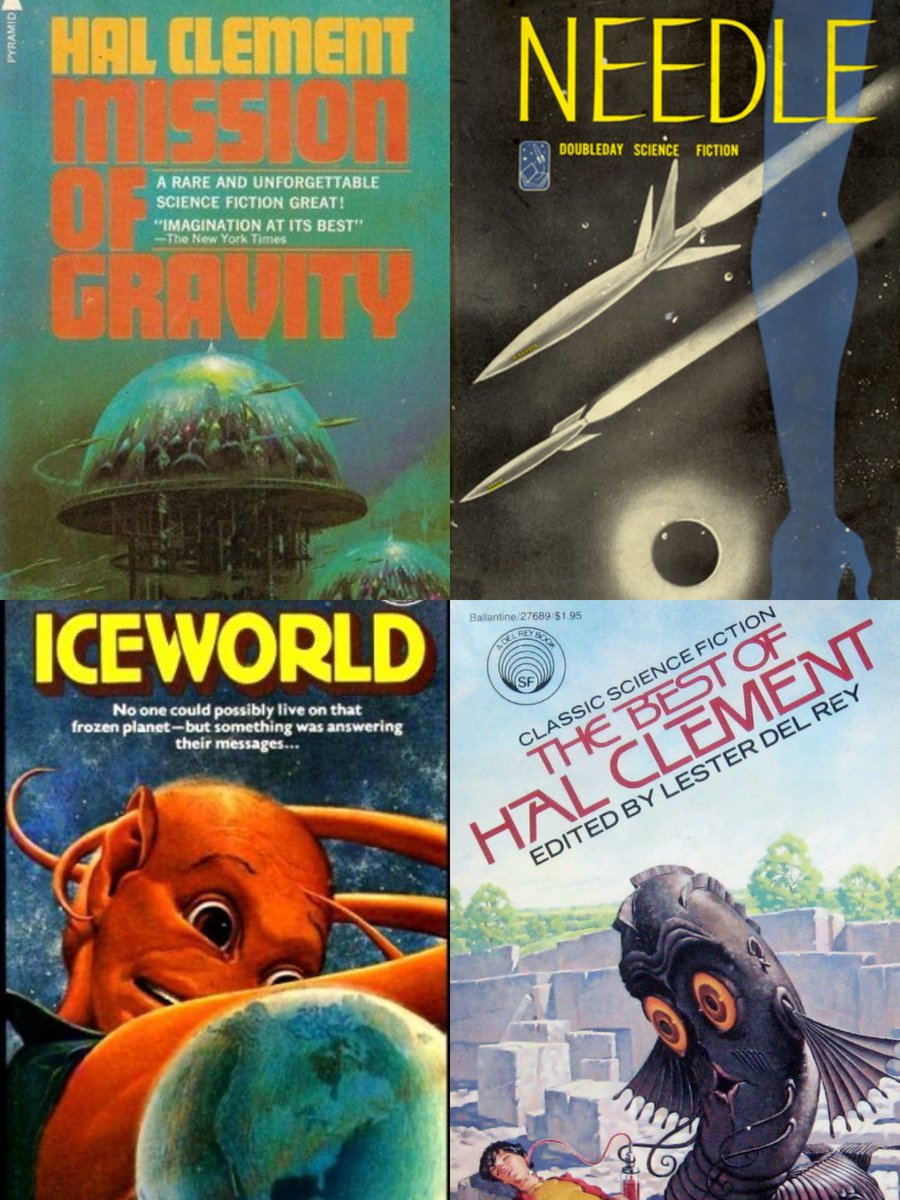
Hal Clement
The dean of hard SF, his fiction was typified by scientific rigor and uncompromising world building.
Mission of Gravity (1954): On the crushing, high-gravity world Mesklin, a human scientist enlists the help of a native, centipede-like ship captain to retrieve a lost probe.
Needle (1950): A symbiotic alien detective merges with a teenage boy to hunt down a fugitive of his own species hiding amongst the members of a small island community.
Iceworld (1953): An alien from a high temperature planet is enlisted to investigate a drug-smuggling operation on a frozen world.
“Uncommon Sense” (1945): Clement’s most famous short story is a hard SF puzzle in which an explorer, marooned by his mutinous crew, deduces the alien biology of a hostile world and turns it against them to reclaim the ship.




Leave a Reply