Well, I received some good news and bad news yesterday. The good news is I get an extension on the June deadline for that short story I’m working on. The bad news is the extension may be indefinite since it appears the planned anthology may end up a victim of (cue villainous cue) “the economic downturn”. Yes, kind of a drag, but all is not lost. If I’m unable to find the story a new home, I’ll simply serialize it on this blog where it will prove far easier for you all to criticize and belittle.
Hey, to whoever asked what gun Lieutenant Scott will be using in the series, the answer is the big-ass one. Unfortunately, I didn’t get the name, but it’s the one that Ben Browder was so fond of. The one with the collapsible stock. Yeah, that one.
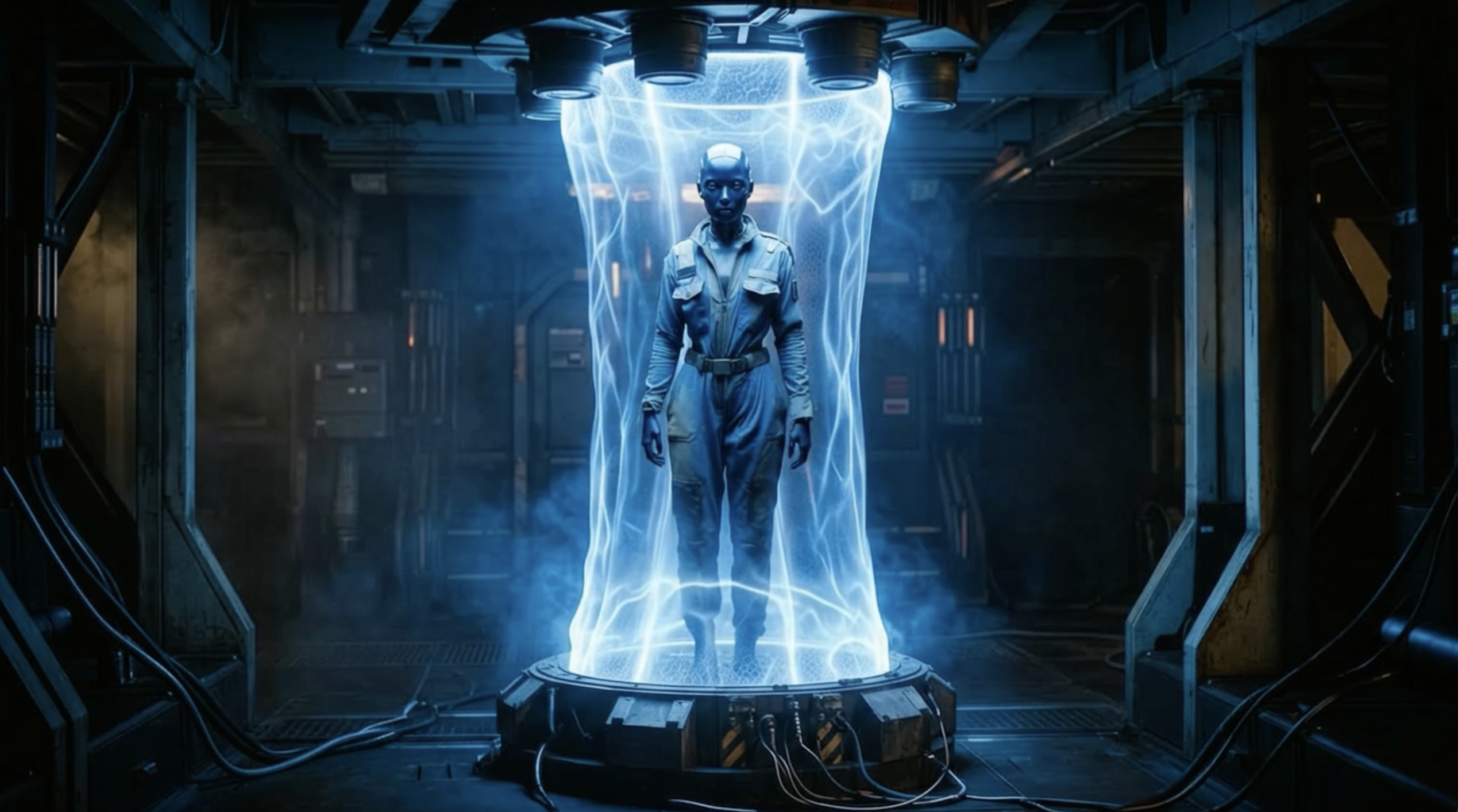
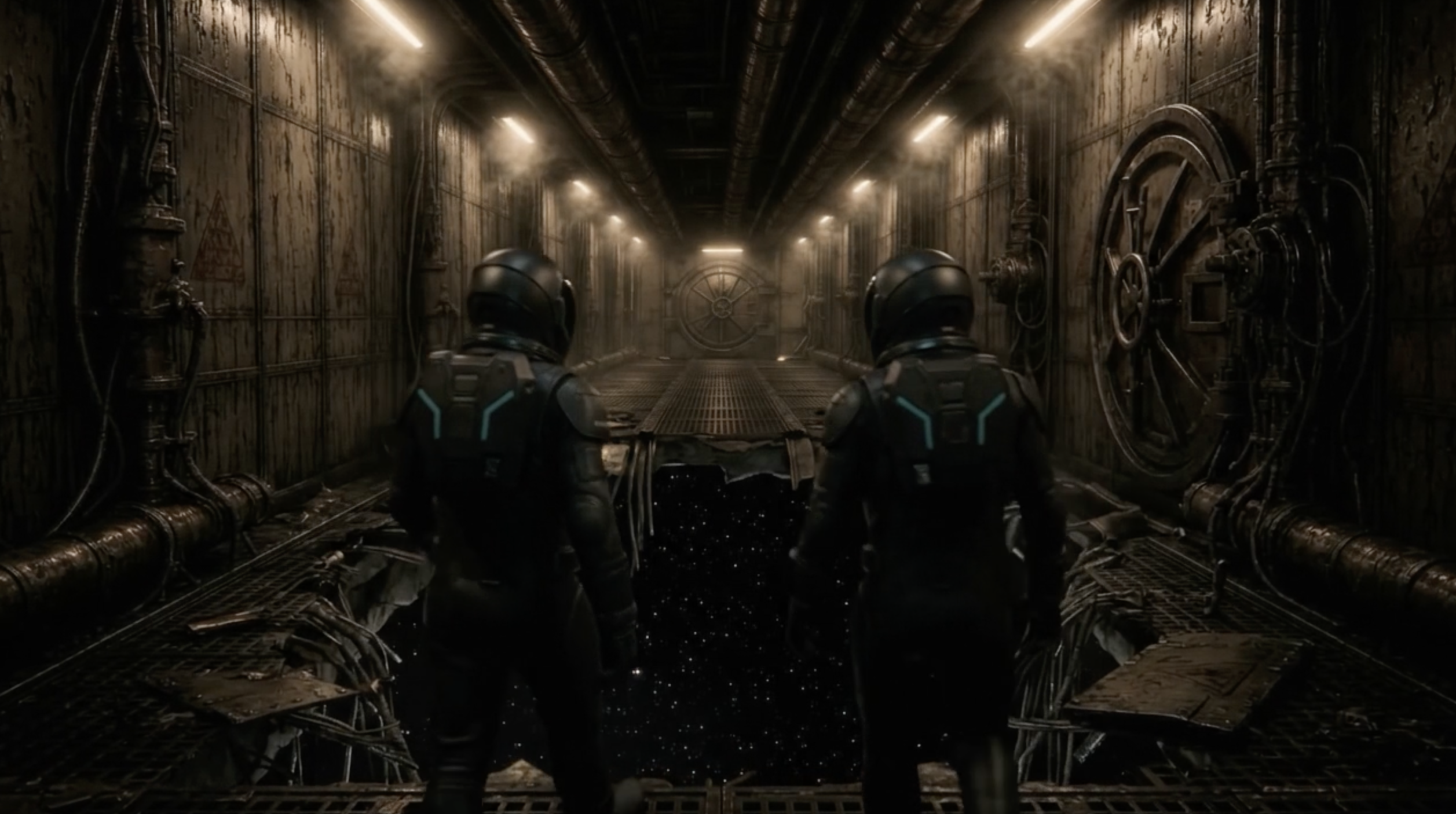
Yesterday was a huge day on the Destiny set. While most days will average 4-5 scenes, this one focused on only one. One BIG scene involving the entire cast + plenty o’ extras. Tomorrow’s line-up, meanwhile, is looking muy angustia! Oh, and just so you all know – Director Andy Mikita is doing an amazing job. The dailies have been incredibly dynamic. Kudos also go out to Director of Photography Rohn Schmidt for achieving such a unique and impressive look for the new show.
With the first draft of my script well-received and suggestions that the rewrite shouldn’t be all that significant, my thoughts turn to the kino elements. Hmmm. If I were a fan, what would I like to see?
The Book of Joby discussion:
Candace writes: “There are plenty of other books that try to bring a King Arthur story to modern day, whether it’s the main plot of the story or not. The only other one that I believe is just as good as this one, is called The Forever King.”
Answer: I’m not familiar with The Forever King, but I agree with you about Ferrari’s success in transplanting elements of the Arthurian legend to our contemporary world. I think that the main reason it works so well is because he does a wonderful job of establishing the chivalric ideal very early on and then goes on to develop three very well-rounded characters who, unbeknownst to us, are the equivalents to Arthur, Lancelot, and Guinevere. To be honest, despite the Arthurian throughline, I didn’t even think about the parallels between the love triangle and friendships until the big reveal – at which point it all made perfect sense.
Candace also writes: “And this relationship between Lucifer, God, and the angels was fantastic to read. Probably the most entertaining I’ve come across.”
Answer: I too enjoyed the contemporary, more grounded spin on God, Lucifer, and the angels. I liked the fact that many of the angels were conflicted and expressed doubt, and that when it comes down to the finer points of contractual obligations, God can out-lawyer Lucifer himself.
Candace writes: “ You could say that Ferrari definitly took a chance with this novel, especially with all the craze over how people bring religion into fiction these days. It wouldn’t surprise me to one day find this on the forbidden list of the Catholic Church.”
Answer: That’s interesting. I wonder what readers with stricter religious convictions thought of the book. On the one hand, the contemporary reimagining of God, Lucifer, and the angels could be considered risky as would some of the language and situations that pepper the book; on the other, the book does present a very positive portrayal of God, the church, and the power of the goodness intrinsic in all of us.
Sunstonetal writes: “his descriptions are amazing, i especially liked the description of the Garden Coast, Joby’s first visit to Taubolt, and the final meeting at the end with the divine characters and Joby finally getting a chance to reconnect with God. it’s hard to pick out just a few.”
Answer: I agree, and I think a lot his skill in painting an engaging picture for the reader stems from his 17 years as an illustrator. That said, I’m curious if he actually has any illustrations to accompany this book.
Sorrykb writes: “Hasn’t it always been the depictions of Lucifer and demons that have been more interesting through the history of literature?”
Answer: Absolutely. Not only throughout the history of literature but film, television, and music as well – the devil and his minions have always been more interesting. This is one of those rare instances where I would say the depiction of God is even more interesting than that of this rival. His little talk with Gabe at book’s end sealed the deal for me, showing him to be not only good and honest but infinitely clever as well.
Sorrykb also writes: “I gave the book to my very Catholic parents for their birthdays at our family celebration over the weekend. I think mom will love it. Dad … well, either he’ll love it as I hope he will or (as Candace suggested in her comments) he’ll think it’s blasphemous. Guess I’ll find out soon enough.”
Answer: Would love to hear what they thought.
Herbertsommerfeld writes: “. I was worried The book of Joby was going to be either blatantly evangelical, or blatantly heretical.”
Answer: Yep, that was my worry starting the book as well. But Ferrari proved himself too skilled and subtle a writer to go the simplistic or obvious route.
Ponytail writes: “Despite all the terror and bad news, this book is full of humor.”
Answer: I’ve always been a big proponent of humor in even the darkest of materials. Those moments of levity engage the reader on a whole other level, giving the grimmer elements of the story that much more weight in contrast.
Ponytail also writes: “One disappointment is that Mr. Ferrari did not include any original illustrations in the book. I would have loved to seen some of his artwork especially made for the Book of Joby. That would have been awesome!”
Answer: I think back to a past book of the month club selection, Catherynne M. Valente’s The Orphan’s Tales: In the Night Garden, and the beautiful illustrations that accompanied each chapter, adding to the text’s fairy-tale quality.
Ponytail also writes: “I found myself wanting to do good deeds or tring to keep a positive attitude.”
Answer: Maybe we can start our own online Knights of the Round Table.
Thornyrose writes: “So one of the first things I looked for in the prologue, and later through the book, was a reason why God should bother to wager at all with his fallen creation, and what he should gain from making the wager.”
Answer: Interesting question. Someone has already suggested that since God is all-knowing, he is aware of how this wager will end and so makes the bet because he is comfortable with the end-result. But that doesn’t explain what he stands to gain. And there’s also the fact that while, at wager’s end, we can say “No harm, no foul.” in the long run – except for all of the hardships Joby has been made to suffer as a result of the bet.
Thornyrose writes: “For me the single most powerful moment of the book comes at this stage, as Joby has begun to feel once more a sense of idealism and a desire to fight for justice. He not only is working on his own redemption, but manages to help Gypsy bring about his own salvation. Then to have the whole situation come crashing down around him… this is where I actually felt tears welling up, as the characters truly became alive.”
Answer: Yes. Of all the dark moments in this book, Gypsy’s death was the one that most affected me as well.
Thornyrose also writes: “I must also admit that I found the Author legend overlay onto the story to be a distraction rather than an enhancement of the story. For me it seemed to serve as a way to introduce a machina ex deux, so to speak, in the form of Merlin.”
Answer: I thought it worked nicely early on as a source of inspiration for the young Joby, especially when he and his friends create their own version of the Knights of the Round Table. I was less enamored when elements of the legend crossed over into reality.
Dalene writes: “As a Christian who’s read the Bible’s Job, I think we’re all forgetting one thing…this isn’t so much about a “wager” between God & Lucifer over Job/Joby. As a Christian, I believe that there’s a spiritual war that goes on in every person’s life. […] So I think the story of Job/Joby is really about ALL of US & the war God is fighting for OUR souls.”
Answer: Yes, the book is a dramatic representation of the internal battle you refer to. While it’s arguable whether actual forces of good and evil are exercising a direct influence over our daily lives, this is the case in The Book of Joby. Stepping back to look at the big picture, what you say is true, but approaching the book as an isolated work of fiction begs several questions, like the one Thornyrose has posed.
Sparrow_hawk writes: “Joe, I’m not sure what you mean be “a ringer” – the fact that the angels disobeyed or about Joby’s fate?”
Answer: I meant that since God got to choose his champion, he selected an individual who, unbeknownst to Lucifer, was much more than he appeared.
Sparrow_hawk also writes: “You said you had hoped that the story would show that an ordinary person would remain true to what is good. But Joby couldn’t stay true to what is good and beat Satan on his own. Joby needed help but stubbornly refused to ask for it. I think the point is that no one can do it alone.”
Answer: Interesting. In that case, the individual is essentially flawed/doomed and, left to his own devices. But doesn’t that run contrary to your claim that “But for God, the wager was not just about Joby but about the intrinsic goodness of His Creation”? It isn’t enough to be good. One must have help as well?
Antisocialbutterflie writes: “What I found particularly interesting about the book was the author’s decision to abandon the current dogma that angels are inherently incapable of free will (citing Constatine, Supernatural, and ironically the movie Dogma). Typically the angels that violate the edict are portrayed as evil or at least jealously misguided. The deviation from this dogma was honestly the twist that really surprised me. I was expecting God to win, Joby to get the girl, and the people of Taubolt to end up relocated but safe, however I was not prepared for that. I guess it was a distinction that would only be noticed by someone to enjoys the angel mythology, but for me it was significant.”
Answer: Hmmm, that’s interesting. It’s a distinction I missed but, now that you mention it, Ferrari’s treatment of angels is significantly different from their depiction in other filmic and literary sources. Off the top of my head, I can’t recall a similar portrayal. But you’re clearly the angelic expert.
Antisocialbutterflie also writes: “I think that what thrilled and terrified me about this book was the mechanism that Lucifer employed to turn Joby. Rather than straight confrontation he used malcontent and drudgery. Joby faced down little mounting frustrations and the purposelessness that I know I feel on a daily basis. I suspect that 95% of Americans probably feel the same way.”
Answer: And I think that is a significant part of the book’s appeal as well. While readers may not exactly be able to empathize with a protagonist caught in a battle between the forces of good and evil, they can certainly connect with many of the typical and more down-to-earth hardships that Joby is forced to endure. Oh, and by the way, welcome back. I fear you’ve been living up to your screen name.
Loving the discussion. Just a reminder to those of you who’d like to post a question for the author. You have until tomorrow night!



Leave a Reply