
Last night, Akemi and I watched Misery. It was her first time, my…what is it now…twelfth? It’s my favorite Stephen King movie and last night’s screening further cemented it as one of my top ten favorite films of all time. Brilliant performances, a tightly plotted script, and some of the most excruciatingly suspenseful sequences ever committed to celluloid. Nowadays, most horror movies are simply excuses for extended visceral sequences that, after awhile, border on the cartoonish in order to satiate the appetite of an increasingly jaded audience. Misery, in comparison, makes masterful use of the “the build”, crafting unnerving, edge-of-your seat sequences that build in intensity, leaving the audience wondering what…when…where? And when the answer comes, it’s horrific and, best of all, unexpected. The race back to the room from the kitchen search, the vengeance denied by the hallway hesitation, the startled late night awakening to the looming beside visitor, the frustration of the spilled wine, the shocking shotgun blast, and the hobbling. Oh, the hobbling. We only really catch a glimpse of it, a fraction of a second when Annie swings her hammer and connects, but it’s damn effective. And I would argue that seeing her heft up the hammer and swing for the other foot, even though we don’t see it connect this time, is even more disturbing. The sequence is so unsettling that it has remained with me after so many other far gorier moments in horror filmdom have faded. Just a perfect movie.

Thanks to everyone who has weighed in with their concerns regarding my planned trip to Comic Con. Fear not, I won’t be sleeping on the streets of San Diego. Dark Horse Comic’s New Events and Community Manager, the super-lovely Kari Yadro, has assured me she’ll be able to swing my accommodations. Whether it’s staying at the hotel that Dark Horse has already booked or napping in Kari’s winnebago while she’s working, I think I’m covered.

Returning to my ruminations on Stargate: Atantis’s first season…
POISONING THE WELL (107)
This was my favorite episode since the two-hour opener. It offered a difficult moral and ethical dilemma with no easy answers and a wonderful emotional arc in Carson Beckett’s working relationship with Perna, the Hoffan scientist. I like my endings like I like my chocolate, bittersweet, so the conclusion to this one really resonated with me. The episode also delivers one of the most unwieldy, difficult to deliver lines in Stargate history with “One hundred percent cellular penetration in all five test inoculations”! Try saying that five times fast.
The captive wraith gets a name, Steve, only to die before we get a chance to know him. C’est la vie. Given the circumstances and his push to experiment on the prisoner, I found Sheppard’s “We’re gonna help you” assurance as Steve succumbs to the effects of the Hoffan drug altogether bizarre. If anyone would have adopted this conciliatory stance, it should have been civilian Commander Weir and yet even she sees the logic in Sheppard’s arguments, acceding to his demands for experimentation. When he first mentions it, she brings up the Geneva Convention to which Sheppard counters that if the wraith were at the Geneva Convention, they would have no doubt fed on the other participants. Good point. Ultimately, this enemy is not one that can be reasoned with. Short of discovering a way for them to gain sustenance without feeding on humans (and we’ll come to that later in the series’ run), it’s kill or be killed.
There are, of course, those pro-wraithers who point out that the wraith’s actions are dictated by survival instincts. They’re not evil. And, while that may seem true (although the obvious joy they take in torturing their prey suggests otherwise), I would point out that the Atlantis expedition and the rest of the humans in the Pegasus galaxy are simply fighting back, the result of their own survival instincts.
UNDERGROUND (108)
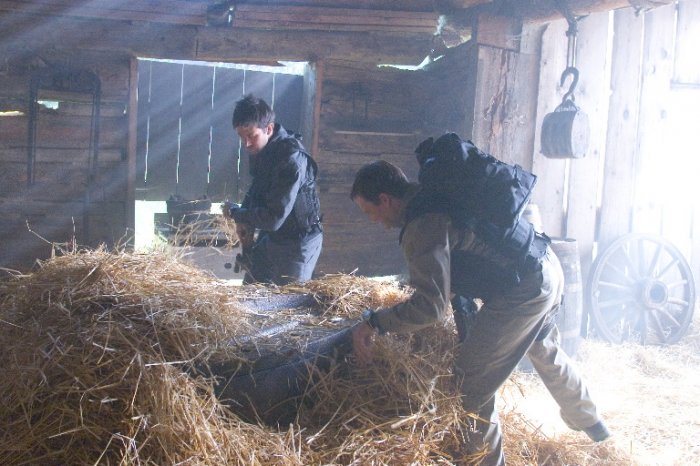
Given the fact the wraith target technologically advanced societies, it would make sense that certain civilizations would seek to disguise their accomplishments from the enemy. Enter the Genii. I liked them as a wildcard, a military society that could prove both friend and foe, depending on the circumstances. I also liked the continued clash between the civilian and military approaches on Atlantis, something we touch on in the previous episode but really comes to the fore here in the discussions between Weir and Sheppard. Again, Sheppard makes sense and Weir inevitably acquiesces to his game plan on the strength of his argument, but what is particularly interesting about this ethical clash is not the debate itself but the fact that Sheppard makes a unilateral decision on dealing with the Genii BEFORE discussing it with his defacto Commander. Not once, but twice!
Later in the episode, the Atlantis team comes clean about the wraith and warns the Genii that they were awakned as a result of their failed rescue op and subsequent murder of a queen. Well, yes and no. Certainly yes in their minds but one could make a very strong argument that the wraith would have been awakened regardless, not because of Sheppard’s actions on the failed rescue op, but because of the information the queen draws out of Sumner: the existence of Earth and the billions of humans just waiting to be fed upon. Of course, Sheppard wasn’t privy to the conversation and has no way of knowing that, while he may blame himself for the wraith’s early awakening, it’s likely that the wraith would have awakened anyway.
Cookie Monster would like to remind everyone that our Supermovie of the Week Club reconvenes tomorrow. Monster will be offering up his thoughts on Batman Forever, so make sure you watch it so that you can provide an informed opinion on his review.
Today’s entry is dedicated to blog regular Debra.



Leave a Reply