
***
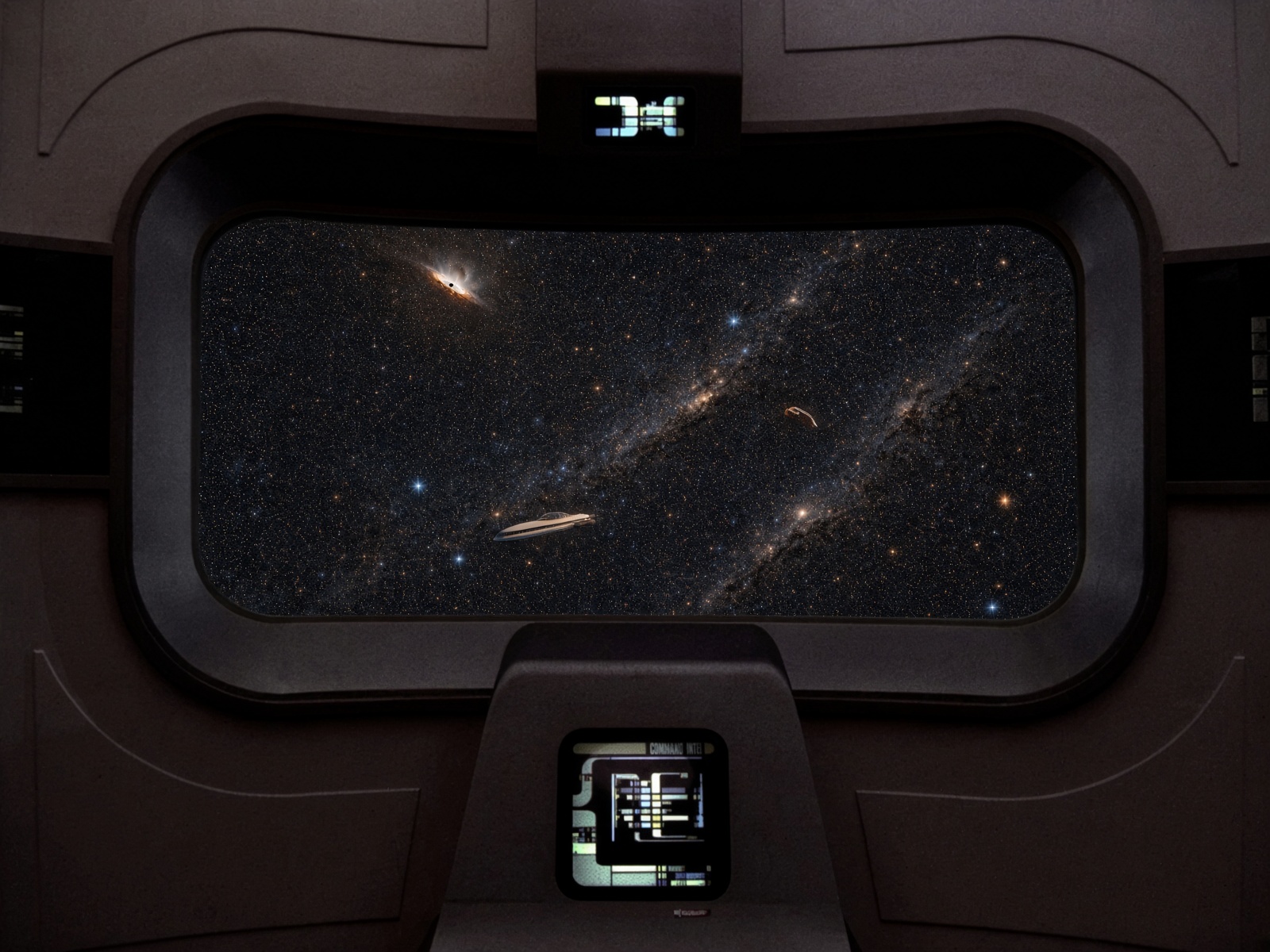
Captain’s Log, supplemental. The away team is still aboard the derelict freighter. The anomaly’s pulses have been playing havoc with our communications, and their reports reach us in fragments, when they reach us at all. A simple boarding has turned complicated, and I won’t have a clear picture until I can raise them again.
Onboard the ship –
You let the containment cycle finish.
The field drops and the android comes online, her impassive gaze clocking the weapons trained on her.
“Greetings, I am a level-5 service android entrusted with operations aboard the freighter Waldorf Astoria, on its twelve hundredth and fourth voyage. My designation is Maia 3352 and I am property of Traugott Corporation, as is the Waldorf Astoria. Any attempt to unlawfully acquire, interfere with, or damage this vessel or its contents will result in swift legal action. You are strongly advised to disembark.”
She waits. Your move. What do you do?
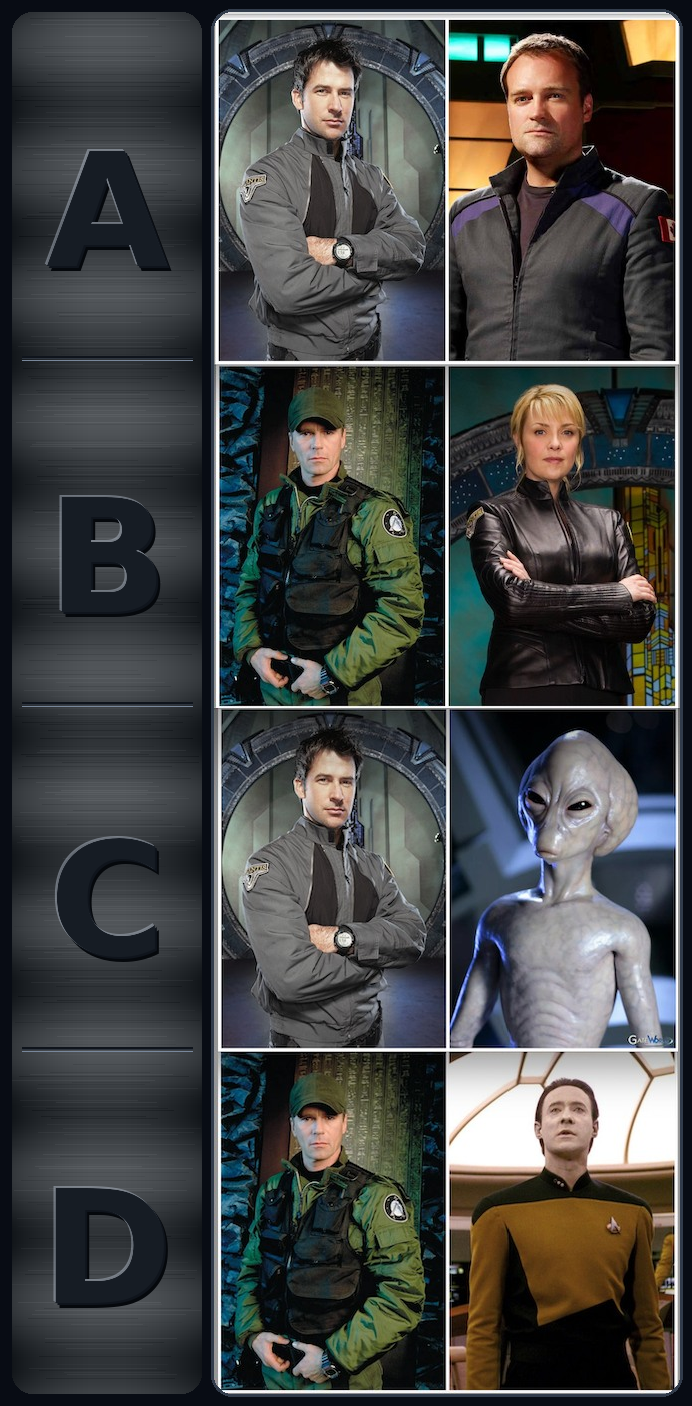
A – Put her back under. Flip the containment field back on and return her to stasis.
B – Let Daniel talk to her. Explain the situation, and suggest you work together to restore ship functions.
C – Have Rommie attempt a neural link to seize control of the android. Fast, if it works, but forcing a peer AI is a gamble.
CHOOSE!
PREVIOUSLY ON…
You and 19 others have been stranded in an amalgam universe of myriad SF realities. All 19 are sci-fi’s Best of the Best. And then there’s you, uniquely qualified given your encyclopedic knowledge garnered from your world where these characters, their technologies, and their stories are fiction, beloved TV shows you have watched time and again. Together, all 20 of you have set off on the Enterprise-D, tasked with finding a way home.
For your first mission, you’ve decided to investigate a seemingly derelict freighter broadcasting an emergency beacon. An away team and puddle jumper have been dispatched to the ghost ship, anomalous energy pulses making beaming and communications a challenge.
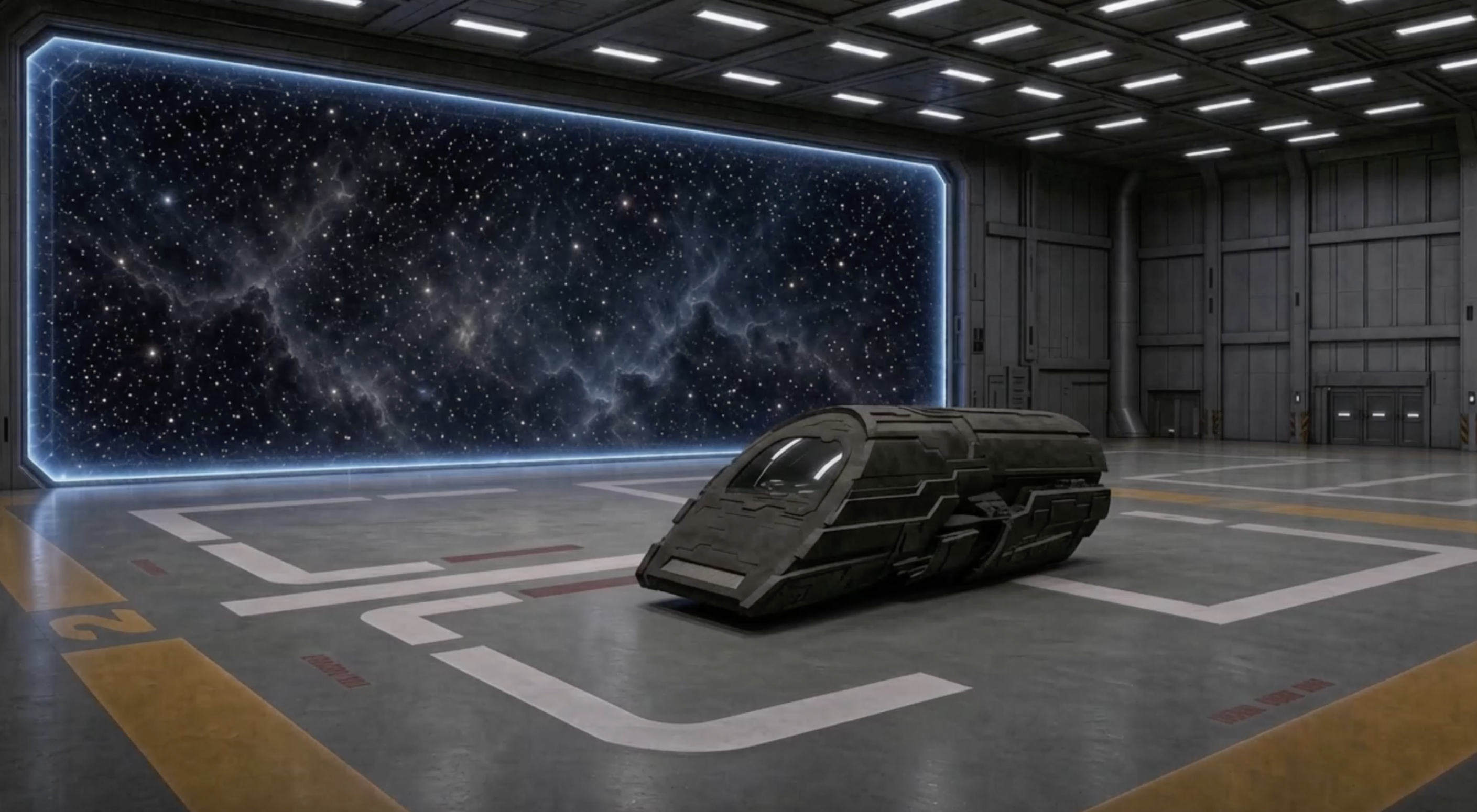
After parking and cloaking the puddle jumper in the freighter’s hangar, the team crosses the airless bay into the ship proper. There, they make the decision to check out the waning energy signature of a containment field en route to the bridge. But they immediately encounter a utility unit that advances on them menacingly. Rommie connects to it and relays a shut down command that causes the robot to collapse.
Further along, they encounter a sealed door and Rommie informs them that the compartment beyond is exposed to space. She suggests locking down their current section and then unsealing the door since it’s the most direct route to the bridge – and that ebbing containment field. They do so. The door slide open to reveal an immense hull breach complicating their progress. Rommie leaps over the chasm and secures a tether to the other side, allowing the rest of the team to pull themselves over. But when they attempt to open the door to the next section, they hit an impasse. The door remain locked and will not respond to their commands.
O’Neill blows the lock with C4, allowing them entry into the adjoining compartment where they discover an android in a containment field, completing its regenerative cycle. The team debates whether or not to question the android.
***

Octavia E. Butler
Winner of two Hugo and two Nebula Awards.
Kindred (1979): A modern Black woman is repeatedly pulled back in time to an antebellum Maryland plantation, where she must keep her white slaveholding ancestor alive long enough to ensure her own existence.
Parable of the Sower (1993): In a dystopian near future, a young woman with hyperempathy develops a belief system called Earthseed while leading a group of survivors northward after the collapse of society.
Bloodchild (1984): Humans live as refugees on an alien world where the insectoid Tlic use human bodies to reproduce in this Hugo and Nebula Award-winning novelette.
Wild Seed (1980): The chronological starting point of the Patternist series follows the centuries-long struggle between two immortals with radically different visions of power and humanity.

Philip José Farmer
Three-time Hugo-winner Philip José Farmer.
To Your Scattered Bodies Go (1971): Winner of the 1972 Hugo Award, this novel – the opening book in his Riverworld saga – sees some 36 billion people, everyone who has ever lived, resurrected along the banks of an enormous river. A provocative exploration of identity, mortality, and human nature.
Riders of the Purple Wage (1967): A Joycean satire and Hugo-winning novella that imagines a future welfare-state dystopia where a subversive artist rebels against the comfortable status quo.
The Lovers (1952): Farmer’s breakthrough novella follows a linguist who falls in love with an alien woman, forcing him to confront the assumptions of his repressive society.
The Maker of Universes (1965): The first book of the World of Tiers series follows Earth professor Robert Wolff into an alternate universe created by powerful, decadent beings. A gloriously imaginative blend of pulp adventure and cosmic fantasy.
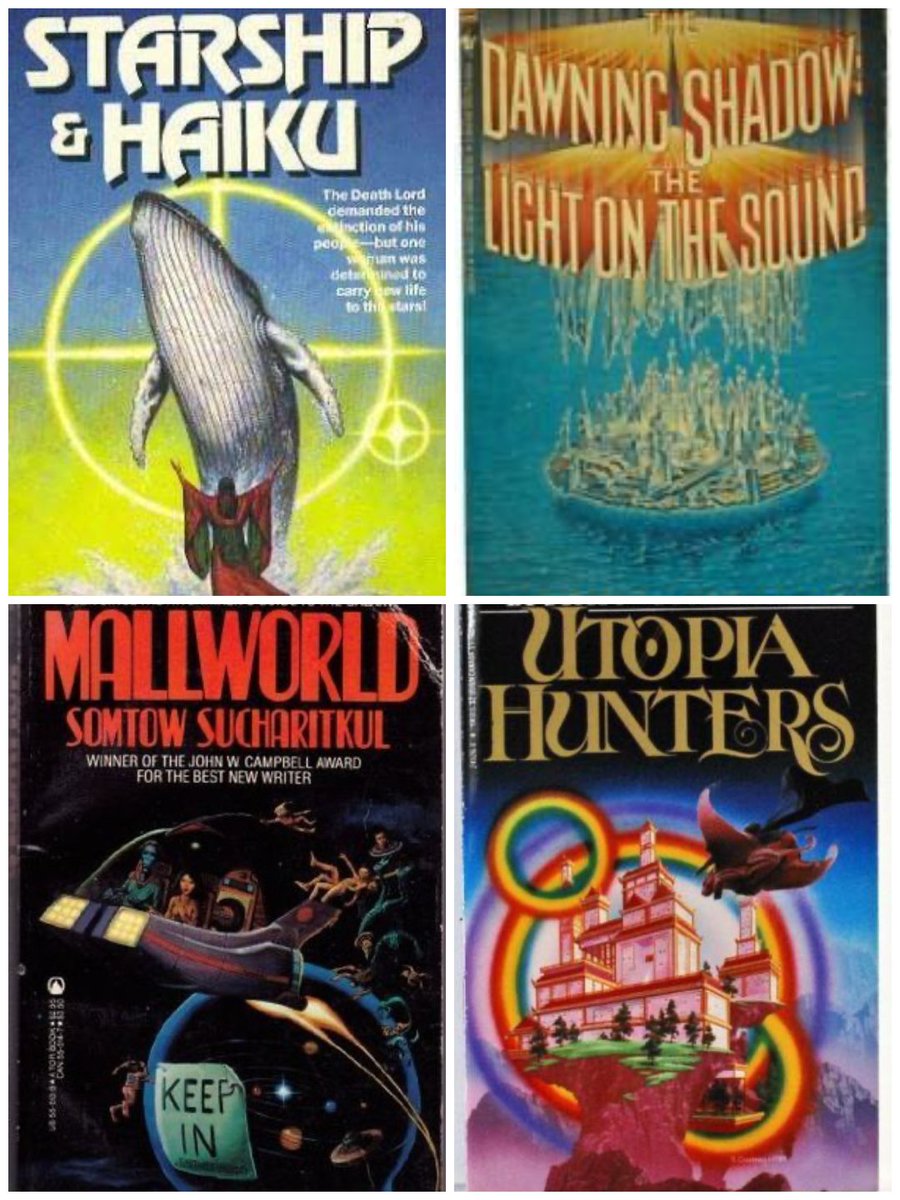
Somtow Sucharitkul
A Bangkok-born composer-conductor who emigrated to the United States and established himself as a science fiction writer.
Starship & Haiku (1981): This Locus Award-winner for Best First Novel is set in a post-apocalyptic Japan where the survivors of biological and nuclear war choose ritual death over degraded survival, as the world’s whales sing a mysterious telepathic song across the poisoned seas.
Light on the Sound (1982): The opening book of The Chronicles of the High Inquest saga presents a far-future universe where the godlike Inquestors rule over a million worlds, destroying or saving civilizations to preserve the balance of the galaxy.
Mallworld (1981): Iconic satirical SF set aboard an orbital shopping mall the size of a small moon, where aliens observe humanity amid a grotesque spectacle of consumerism and decadence.
Utopia Hunters (1984): The third Inquest book, a collection of linked stories that expands the vast galactic civilization through tales of planets, cultures, and peoples caught under the rule of the High Inquest.


Leave a Reply