
Your ship has encountered a derelict freighter transmitting a cycling distress call, and after some debate you have decided to board it by flying a puddle jumper directly into the hangar bay. The bay is exposed to space and a fair distance from your target, the freighter’s bridge, but it offers a more secure getaway since the energy pulses off a nearby anomaly are playing havoc with the ship’s transporters. All the same, Scotty is standing by should the near arise.
Now, you must decide on your away team. Two accomplished pilots, possessed of the ATA gene that allows them to man the jumper, will lead. Who is going with them?
Pick a row, A through D.
Choose!

PREVIOUSLY ON…
You and 19 others have been stranded in an amalgam universe of myriad SF realities. All 19 are sci-fi’s Best of the Best. And then there’s you, uniquely qualified given your encyclopedic knowledge garnered from your world where these characters, their technologies, and their stories are fiction, beloved t.v. shows you have watched time and again. Together, all 20 of you have set course on the Enterprise-D, tasked with finding a way home.
Your first mission: Investigate an emergency beacon being transmitted from a seemingly derelict freighter. (The Ghost Ship)
Now, a few under-read and under-appreciated SF authors for you to discover…
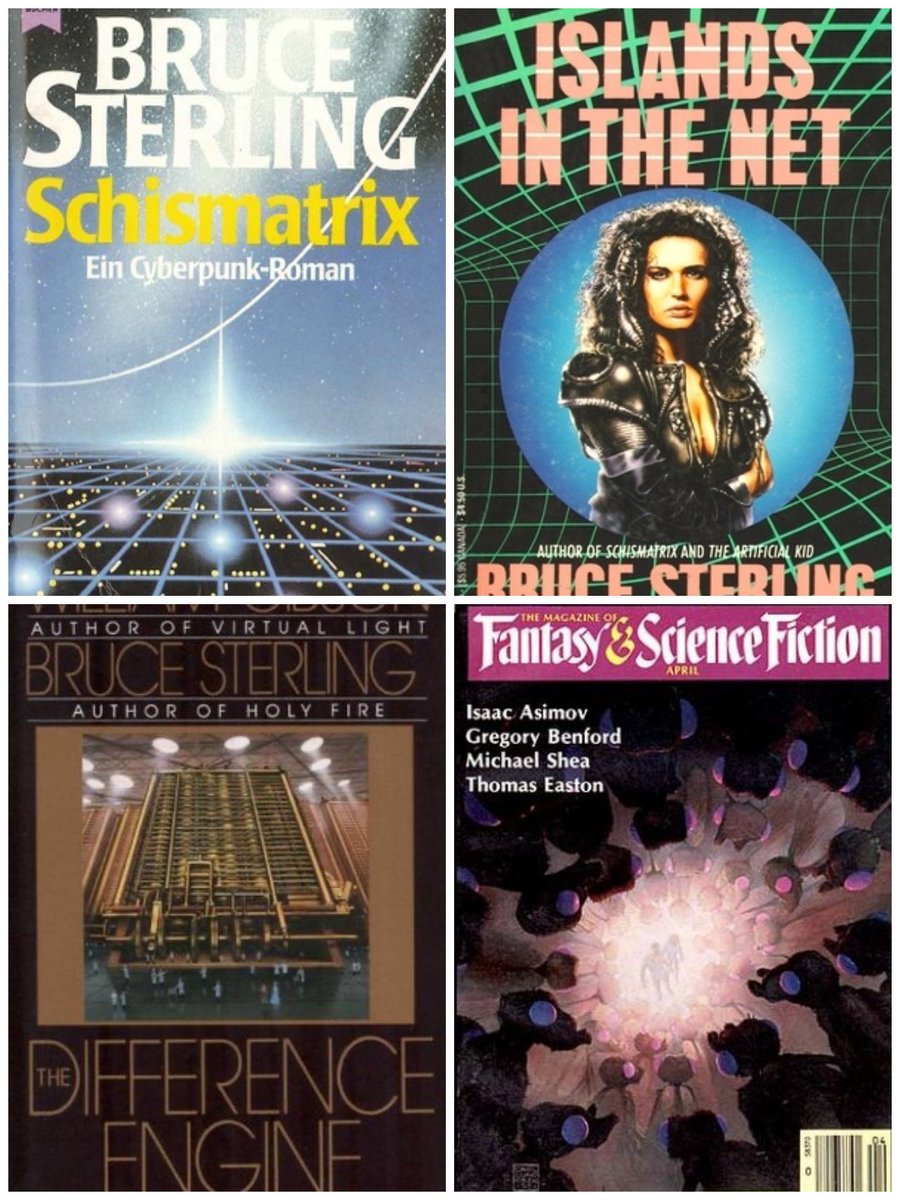
Bruce Sterling
A chief architect of the cyberpunk movement.
Schismatrix (1985): The definitive posthuman space opera of the 1980s follows diplomat Abelard Lindsay across a fractured Solar System inhabited by two competing posthuman factions: the genetically engineered Shapers and the cybernetic Mechanists.
Islands in the Net (1988): A corporate troubleshooter is drawn into a war against rogue microstates trafficking in information in this prescient global thriller that foresaw developments such as data havens, corporate warfare, and drone strikes.
The Difference Engine (1990): Co-authored with William Gibson, this novel is set in an alternate Victorian England where Charles Babbage successfully built mechanical, steam-powered computers. It helped popularize the steampunk subgenre.
Swarm (1982): A Shaper agent infiltrates a vast insectoid hive-mind in a hollowed-out asteroid, intending to hijack its biology and breed a slave race – only to rouse the Nest’s dormant intelligence. A chilling masterclass of evolutionary horror.
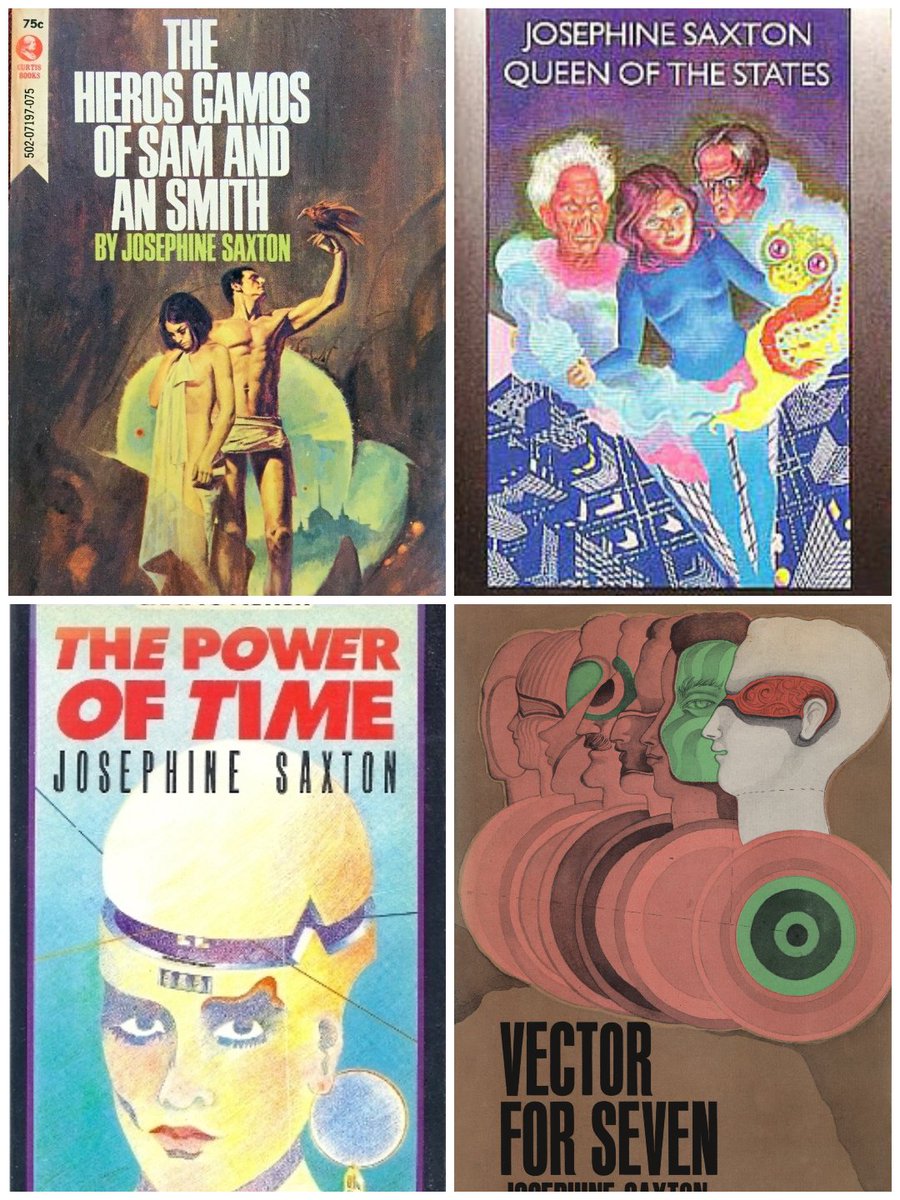
Josephine Saxton
One of the most distinctive voices of the British New Wave.
The Hieros Gamos of Sam and An Smith (1969): This debut novel is a dreamlike exploration of identity that follows two protagonists on an increasingly weird spiritual and psychological journey.
Queen of the States (1986): A woman shuttles between a psychiatric ward and apparent alien abduction in this surreal critique of institutional control.
“The Power of Time” (1971): A deadpan far-future fable in which the narrator buys Manhattan and has the entire island transported to a sleepy English village. Saxton’s most widely anthologised story. Vector for Seven:
The Weltanschauung of Mrs. Amelia Mortimer and Friends (1970): Mrs. Mortimer leads a group of travelers on a shifting, hallucinatory passage through unstable realities in this wildly imaginative blend of psychological speculation, social satire, and New Wave experimentation.

Mack Reynolds
A master of sociological science fiction whose stories probed automation, economics, and the forces that shape society.
Mercenary (1962): In a caste-locked future where the masses live on a guaranteed income and corporations settle disputes through televised, government-sanctioned combat, career soldier Joe Mauser fights his way up a rigged social ladder – the one exit the system still allows.
Black Man’s Burden (1962): One of Reynolds’ most provocative works – a team of African-American agents, covertly sponsored to modernize the North African Sahara through technology and social engineering, pursue a development model that rejects both colonial exploitation and Cold War intervention.
“Compounded Interest” (1956): A time traveler leaves a handful of gold coins with a Venetian bank and lets centuries of compound interest swell them into a world-sized fortune – one he needs to bankroll the very time machine that sent him back to make the deposit.
Status Quo (1961): A government agent hunting a wave of flawless counterfeit bills uncovers “the Movement,” a subversive network threatening a conformity-bound society that has come to prize stability over freedom or progress.






Leave a Reply