
Raymond F. Jones
His hard SF blended scientific ingenuity with uncanny psychological twists.
This Island Earth (1952): Assembled and expanded from three previously published novelettes, this novel follows an electronics engineer who unwittingly passes an alien recruitment test. Immortalized in the classic 1955 film adaptation of the same name.
Renaissance (1951): On a utopian world ruled by a giant computer, Ketan discovers a gateway to an alternate, dying Earth. An intricate adventure that the SF Encyclopedia has likened to the works of A.E. van Vogt.
The Non-Statistical Man (1964): After residents of a town begin filing uncannily well-timed disaster insurance claims, an investigation uncovers a scientist who claims to have discovered a way to enhance human intuition.
Noise Level (1952): A group of scientists succeed in inventing an anti-gravity drive after being told a deceased colleague had already solved the problem. Witty, high-concept psychological SF.

Suzette Haden Elgin
A linguist whose fiction explored language as an instrument of power.
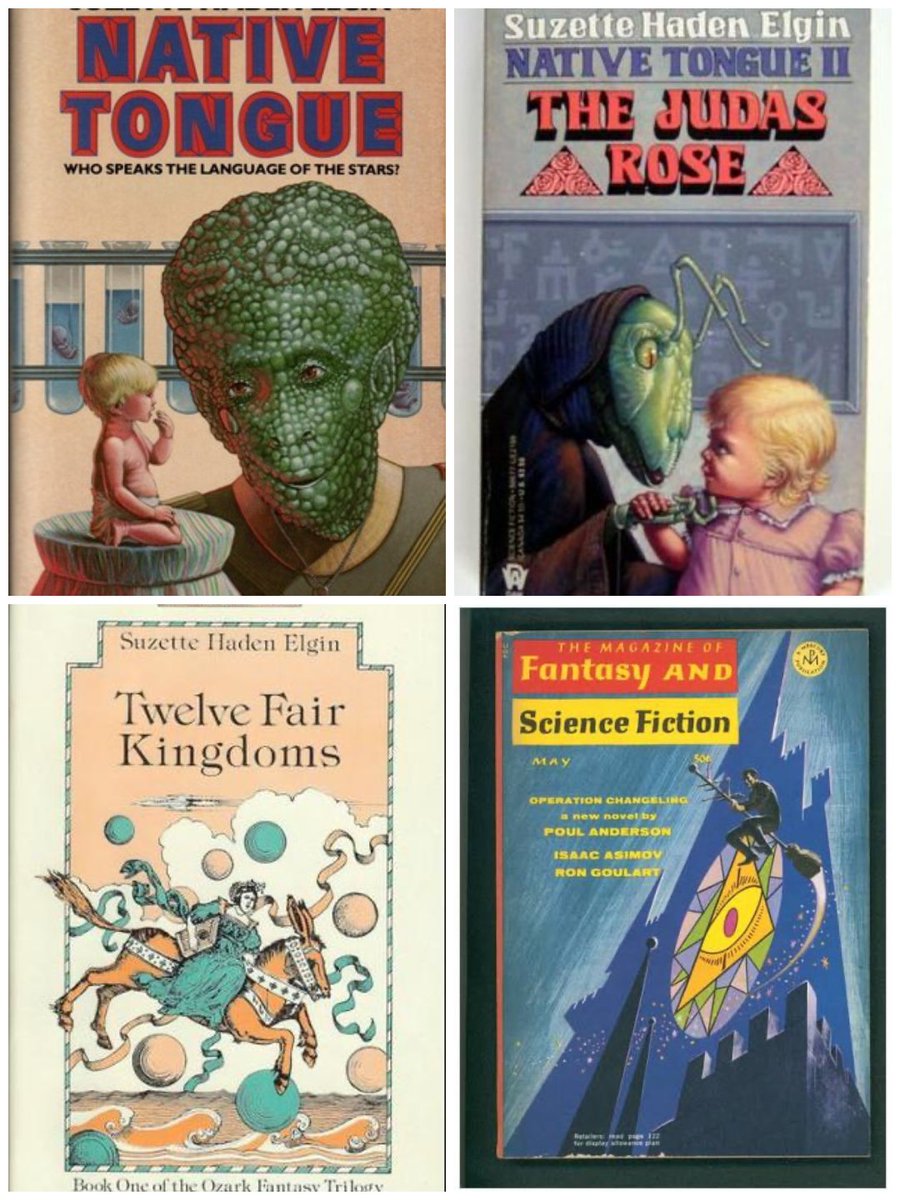
‘Native Tongue (1984): In a future where women have been stripped of their civil rights, the women of the linguist clans secretly create Láadan, a language all their own. A cult classic and a landmark of feminist SF.
The Judas Rose (1987): The sequel to Native Tongue explores resistance through language, deepening the intrigue as the Láadan experiment expands and its creators face growing opposition from the authorities.
Twelve Fair Kingdoms (1981): The first book of the Ozark Trilogy blends SF, fantasy, and Ozark folklore with real wit. It is set on the planet Ozark, settled by mountain families who kept their Ozark folkways and dialect while running their world on a formalized system of magic.
“For the Sake of Grace” (1969): This novelette depicts a society where a girl’s only route to standing is a merciless examination for the priestly caste of Poets — and failure means being walled up for life. Sharp and dark, it showcases Elgin’s talent for combining speculative ideas with social commentary.

Richard Cowper
Nnown for his lyrical, pastoral SF.
The Road to Corlay (1978): Set in post-apocalyptic England centuries after the Drowning, in a society where science is myth and a rigid Church holds power. After a young piper is martyred, the movement that springs from his death begins to spread, and the Church moves to crush it.
The Twilight of Briareus (1974): This quiet, haunting novel unfolds after a distant star goes supernova, unleashing radiation that renders humanity sterile and appears to spell the slow end of our species – while something stranger begins to make itself felt among the survivors.
Piper at the Gates of Dawn (1976): The introductory novella to the Corlay sequence, set a thousand years from now, as an old storyteller and his young nephew, a gifted boy whose pipe works a kind of magic, travel through a flooded, feudal England. As they go, the boy’s playing becomes bound up with the prophesied coming of a mysterious white bird.
The Custodians (1975): Set partly in a remote French monastery, this Hugo- and Nebula-nominated novelette centers on a small room built precisely at the intersection of strange force fields, where those who enter can glimpse the future – and wrestle with what, if anything, they should do about what they see.




Leave a Reply