First order of business: Hey, Jason Momoa wants to know your favorite Ronon line. Let’s hear ’em.
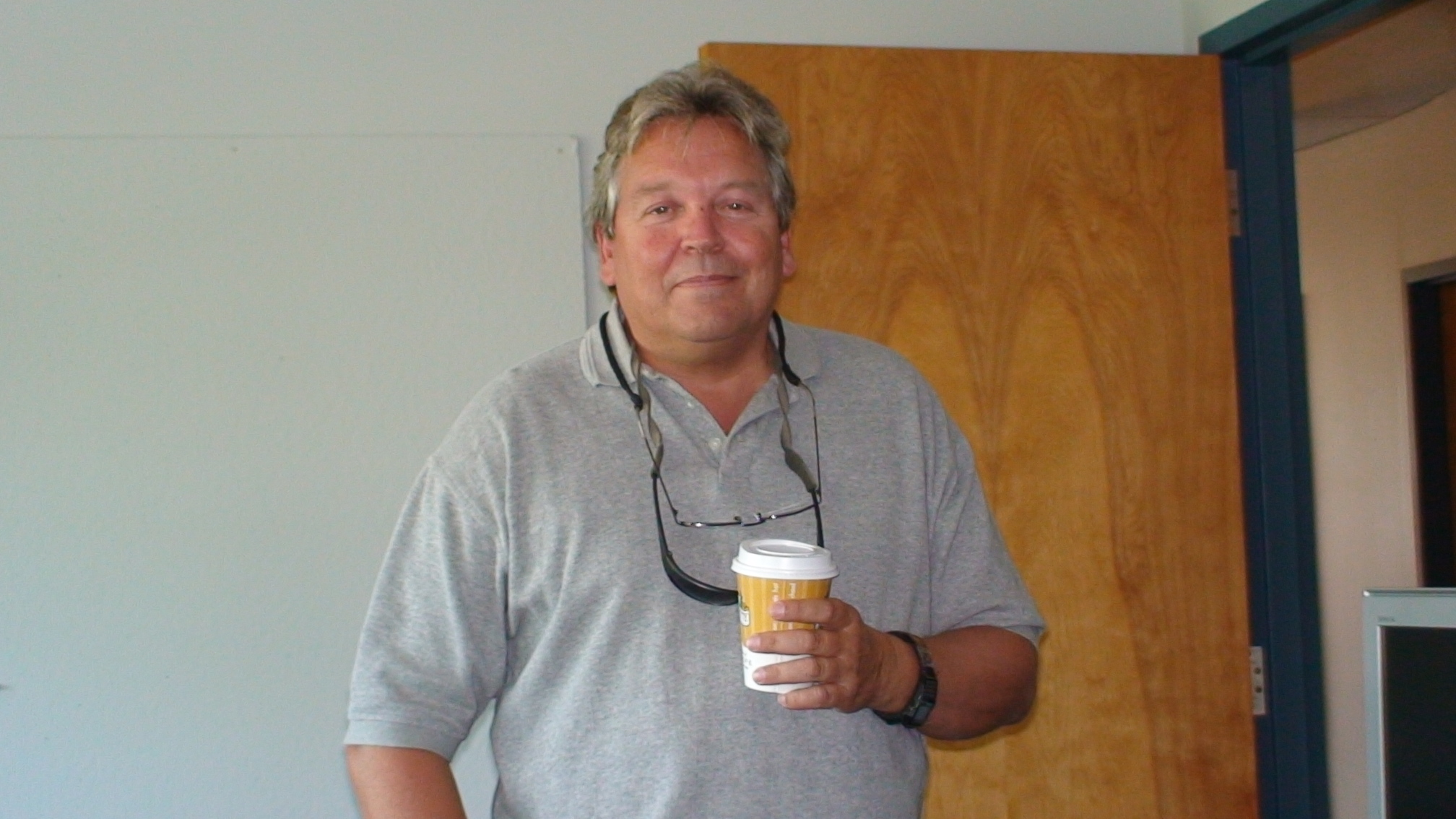
Second order of business: Today, I turn the blog over to Stargate Director of Photography Jim Menard who has been with the show for – well, as long as I can remember. Now I’m sure many of you reading this are wondering: “Joe, what the heck does a director of photography do?”. Hey, if knew the answer to that question, I wouldn’t have invited Jim here to explain it to us. And now that he has, things are a lot clearer for me as I now understand why, every time I visit set, he’s always standing around those damn lights. Anyway, enjoy the Q&A and, once you’re done, check out the Weird Food Purchase of the Day video at the bottom of this entry. Today, by popular request: chicken feet.
Hello everyone, thank you all for your continuing interest in the show and for sending along the questions. When Joe asked if I would be interested in participating in the blog I was delighted and only asked him one favor, “Could they only ask questions with a yes or no answer as I am not a writer and cannot type very fast?” He said, “No.”
So, here goes, a short intro which may answer a few of the questions. Being an avid skier in my teens, I was inspired by Warren Miller and planned, with a couple of friends, to produce a feature ski film after graduation. In 1975 we released ’Skiing In The Mind’s Eye’, followed in 1979 by another called ‘Different Slopes’. These led to contracts to produce some ski area promotion films and commercials. Slowly, the film industry began to grow in Vancouver and I was drawn to second unit photography which mainly dealt with action sequences. Basically, I was being paid to have fun. I worked on ‘MacGyver’ where I first met Richard Dean Anderson and Michael Greenburg who, along with Brad Wright and Jonathon Glassner, helped bring ‘Stargate SG1’ to the small screen. On year two of SG1, I came aboard, alternating duties with Peter Woeste. In general, having two DOP’s gives us some prep time with the director to plan out an episode. It allows the opportunity to test and try out new ideas, and we shoot our own second units which shortens up our schedules and saves money by not tying up a whole main unit to shoot stunts or explosions.
Now, on to some questions.
Bailey writes: “To Jim, what exactly does a Director of Photography do on Atlantis? What decisions are you responsible for making? Which one have you been proudest of and do you regret any choices you have made?”
The DOP is in charge of the camera, grip, and lighting departments. In league with the art director, director, writer, and producer, concepts are created and a plan is formed so that everyone is on the same page. Sometimes very specific looks are scripted and concept drawings are made. I love to take one of James Robbins’ drawings and try to recreate the look on a finished set. It is not always possible as he is creating his lighting on a computer and it is impossible to match in reality. Brad Wright and Robert Cooper gave me a pretty free reign for the look on SG1. If I am going to do something really outside of the box, I will shoot some tests and get a pre-approval on the concept such as was the case with ‘Tabula Rasa’, making irreversible commitments to the HD recording with the use of filters and control settings.
On set I am lucky to have great camera operators, Greg Fox and Ryan Purcell, who can concentrate on the shot we have blocked out and rehearsed. This gives me time to work with the gaffer (head of the lighting department) and key grip who is in charge of lighting control and camera movement.
One of the best things I have achieved for the show is probably the practical puddle. It improves every year as we get better and better LCD projectors. It started on SG1 when Thor came through the puddle ended up in a length discussions with the puddle behind him. I had the VFX department generate a puddle loop to project, and by keeping the light levels low to create a shallow depth of focus we did every close-up practically (without visual effects) except for the actual pass-through. Over the years, we could project on to bigger and bigger screens and, by making a screen that fits in the gate, we now do a lot of full gate shots. It is best if you do not feature it too closely and save the real CG for when we are right in front of the event horizon. VFX puddles cost between five to seven thousand per shot so you can imagine how much money is freed up for other things. My only regret is not getting a cut of the savings!!
Melissa writes: “Now Question for Jim Menard, because he’s seriously one of my heroes, as I’m a ltheatrical lighting designer who loves his work:
What is your preperation process? Do you experiment, draw things out, test during whatever time you get or do you just wing it? If you plan everything, what method do you find easiest?”
In prep we start with a concept meeting which is on the first day that the other rotation is starting to shoot an episode. This gives us only seven days advance before we start shooting. With a rep from each department, we go through the script and talk about how to make it all work. On bigger shows, we will get a heads-up from the art department well in advance in order to start thinking about problems. I get copies of all the art work and floor plans and use these to draw lighting plots on. Recently I have found it better to walk around with the rigging gaffer and draw the plot on the set so that we can see where the lights can physically go. I do have computer plot makers that will tell me the throw of all the different fixtures and actually give us gear requirements as you place lights on the drawing, but it is time consuming and I prefer to be in the space to judge what we need. I love to test because it means I am trying something new. I will try to be the first to use anything new and get a heads-up from Panavision if new gear shows up. The more I can prep an episode the easier it is during shooting, and it gives the director more time to work with. Some sets will play as several different places so we will sometimes put in multiple lighting set-ups in advance. Then we wing it.
ChelleToo writes: “What inspired the shades of blue for Atlantis and the stained glass around the city?”
The production designer on the pilot was Bridget McGuire. She came up with that plan.
Linda Gagne writes: “For Jim: I have noticed the change in background lighting on the show. From season 1, 2 and 3 being bright to season 4 and 5 being a bit darker, did you make that choice and why? I like it, it is more real life looking, don’t know if that is the reason you did it or not.”
I really like to shoot with very little light so that any practical lights will actually illuminate things. The glow of a cigarette, an LED light on a prop, computer monitors etc. Years ago I saw ‘Teenage Mutant Ninja Turtles’ and had the revelation that you could make rubber monsters look scary by keeping the lighting edgy and dark. I cringe when they write a wraith coming into a set where you can’t justify keeping them dark and spooky. Todd Masters of Masters FX and his people make the Wraith incredibly detailed and they do stand up to very close inspection but they’re cooler sketchy. On my first episode of Atlantis, Michael Blundell came to set and said “You’re really setting the dark bar high.” I like to hear that as the opposite is being too bright. He has done some beautiful, edgy work and I mostly follow his lead on the established sets like the Wraith hive. Lighting can create the mood, feel and look of the show. There is a psychological application through the type, color, and positioning of the different fixtures. Ideally, I like to subtly manipulate the viewer so they don’t even know what I’m up to. Watch ‘Absolute Power’ from your SG1 collection and see if you can pick some things out.
Patricia Lee writes: “Questions for Jim Menard:
Hello Jim
I’ve enjoyed watching all the DVD extras and commentaries you’ve been on for 10 years of SG1 and 4 plus years of SGA and I have to say that your profession is so complicated and detailed. I have a new appreciation for the filming process based on what I’ve learn from you so far that makes my viewing experience that much more enjoyable…so thanks for all you do!
How long have you been involved in film and what drew you to the profession?
I was a Bell and Howell certified projectionist in elementary school and on the stage crew in high school. I made my first ski film in high school when they combined English and social studies and called it the integrated program. You had to turn in a contract on what you would do with totally unsupervised free time for a whole term. I contracted to make a ski film and they bought it.
Since the science of lighting a set has evolved over the years; what in your opinion has be the greatest technological breakthrough in the last 10 years?
LED lighting is coming on strong in professional fixtures. ‘The Queen’ is the first episode where I have used it in a fairly big way. Because the fixtures contain red, green and blue lights you can color mix to get any color you want without gel. This allows us to change the color of a set from the dimmer board.
With the constant change in industry and the refining of techniques, what kind of technical understanding do you require to continue growing as a DOP? Do you have to have a Mechanical Engineering degree?
I keep up on what all of the new gear can do without trying getting too detailed. The size of an image sensor and how it will affect imaging is important to me but how they achieve compression and storage codecs is not.
4- As an established DOP, do you still attend training and seminars to keep abreast of changes happening in the industry?Always.
5- Since you are such a seasoned DOP, do you teach others either in a college type setting; do you take on apprentices or both?Our union has a trainee program but it is only for second assistants. I like to share knowledge as long as I get to use it first.
6- When you switch from film to HD Video, what was the most challenging part and why?Shooting day exterior was the most different thing as the dynamic range of the cameras is less than film. A bright sky that will burn a good negative and be brought back on a scanner with film will be totally gone and burned out on HD. Now that full size 35 mm sensors are coming it will only be a matter of time before they use two of them through a prism to double the dynamic range. That will give it a bigger latitude than film or let you shoot 3D.
Michelle writes: “Jim, I really enjoy it when you’re on the audio commentaries. It’s clear you really love the show, your colleagues, and your work! Two questions: 1) What are the pros and cons of HD filming in terms of lighting? 2) How much of your lighting work is aimed at making the actors look their best, and does that ever conflict with how you or the director want the sets to be lit?”
Part of this is answered above and the ease of burning out the image can also be used to your advantage on interiors. We have a tether to the cameras from an engineering station where we can control all of the functions on the camera. It is a bit tedious running all the cable and keeping everything set and matched but the tapes and hard drives can hold a lot of material so the directors can keep rolling and give the actors more time to play with different performances. I like to make the actors look as good as I can if they sit and talk for a long period of time. During action sequences or while they are moving on a big dolly shot you can get more dramatic as they quickly move from light to light. In order for a director to do 360 degree steadicam shots you usually have to use top light and that tends to be unflattering. With our model shop I have recently developed a wireless dimmer that I can use to operate a camera-mounted LED light which makes it a lot easier to do these shots. We used to put a little fluorescent light on there but if the light got too close to a wall or the actor it would be too bright.
Smiley_face06 writes: “Question for Jim Mernard: What made you want to be a Director of Photography?”
See intro.
Anonymous J writes: “Question for Mr Menard: After listening to various commentaries, I still can’t figure out who’s responsible for the look of a show (angles, light & shadow, colors, lenses etc) – the Director, the Director of Photography or the Lighting Director. And then sometimes the commentaries talk up the camera operator, too. Is there a rule as to who does what, or is that pretty fluid, depending on the individuals involved?”
Will Waring was my camera operator for several years and he is so good at it he was bringing a lot to the party. He asked to direct an episode during contract negotiations figuring they would just give him more money but they gave him one and he killed off Daniel Jackson on his first time out. The episode came out great so they gave him more and now he does it full time.
We try to collaborate and, while the operators are setting shots, we will light and try to work around each other. Our gaffer, Bruno Bittner, is also a DOP and we work together on the lighting. Some shows, he may be called a lighting director.
Flygirl writes: “1-When you are shooting a fight scene, where the action is rapid paced and the actors are very close to each other, as in Broken Ties, do you use one camera on a dolly, a hand-held camera or multiple cameras to catch the action at various angles?
No rules. Hand-held can get you in close and intimate and allow you to move fast, but sometimes sitting back on a really long lens will compress the action and make the hits look closer.
Jason writes: “Jim, First of all thanks for taking time out to answer questions for us fans. My questions to you are: What his harder to do, lighting indoor sets like the Village Set that is suppose to simulate outdoors for night or day? If it wasn’t a problem of time or scheduling, would you like to shoot more outdoor night shoots or is the technical problems involved with shooting outdoors at night more of a pain? Since changing over to HD, what do you find the biggest difference you have to make in order to film in HD and what is the biggest challenge of HD?”
It is harder to make a huge indoor space appear as day than it is as night. The second and largest version of the village had close to two million watts of light available and was on the top five list of my gaffers biggest setups in the city. It is nice to have total control over the light and it has been a lot of fun on that set. I also like the scope of working outside at night and you are right about the time and money. It is not technically difficult but you do require large lighting cranes. HD is not as portable as film as we are attached to an engineering station where we control the look and keep an eye on focus. You can shoot without remote monitoring but you would probably have to redo more stuff. Focus can shift on the cameras as the temperature changes due to a prism block that supplies the light to the three chips. This changes the distance to the sensors enough to put the focus marks on the lens out. We have to adjust the back focus on the lens as this happens during the day. Full-size sensors are coming but are currently too expensive for our situation. This is changing quickly and the RED camera is giving filmmakers that capability. The RED sensor has a fairly low ASA as compared to what I am using, but you can use faster lenses to compensate.
AV Eddy writes: “How’d you get your start in commercial television? Where do you get your inspiration for new or interesting angles/lighting/etc.?”
I like to come up with my own and that is where knowing what the gear can do will let you offer up choices to the director. I will also visit the rental houses and snoop through the inventory to see what’s new. Stage lighting is quite different from movie lighting but has made it’s way into our world. Every set we now do is controlled by lighting boards and dimmers.
Trekkiegirlt writes: “Jim, who is the easiest star to film? Who is the most difficult? Please give examples. Thanks for your contribution to SGA!”
Rachel can stand in any light and look amazing. I rarely require filters with her unless it is for a mood. The Atlantis cast is generally easy to photograph but sometimes Jason’s hair will keep me from getting as dramatic as I like because it blocks the light if you get too far around to the side.
Tim the Technician writes: “Is it difficult to work in enclosed spaces, i.e. the Atlantis conference room, the puddle jumpers, the bridge of the Daedalus/Apollo? Keep up the fantastic work!”
The other advantage to working with low light is that in a small space the practicals built into the set will light the actors and let the director do 360 degree shots. I try to get in on the design stage to have the lights built right in. We have used fibre optics and now a lot of LEDs. The glow from a monitor will be enough to light someone sitting right in front of it and if the monitor is not on camera the playback people will run white to it to glow the actors.
Nika writes: “I was wondering if you could explain how you create the pulsing blue lighting effect for the gateroom when you do the night/lights off scenes. It’s a fantastic rippled water look and I was wondering what the secret was!”
We use a plastic mirror sheet of mylar that is in a four foot square frame and hit it with a daylight balanced fixture which appears blue when you are shooting balanced for tungsten light. By wiggling the frame you get the ripple look. I always look for lights that will give me the same effect and there are now a few although most are not bright enough for big spaces.
Andron writes: “How much has the production changed since you began working on Stargate SG1’s season 2?Do you have now more input/free reign in your lighting choices?”
All of the writer/producers on both shows give us pretty free reign on the sets and if they want a specific look it will be scripted and discussed in prep. Film was a bit more of a dark science as you could play with the look through lighting color temperatures, process, filters, and film stocks and not see it until dailies came. HD is “what you see is what you get“. We also do a digital correction pass in timing where you have another chance at changing the look.
Johnny E writes: “1. Being a DP, what do you find is the hardest part of your job, the prep work for a shot, or shooting the shot itself.
The hardest part is managing time and knowing where to just get what you need or where to indulge a little.
2. Any interest in directing an episode? I thought you had, but as I breifly checked all 14 of my SG dvd cases, i don’t recall seeing your name. If you did, could you let me know so I can rewatch it.I have not directed here although I used to shoot and direct second units. I may give it a shot in the future.
3. Lastly, love when you do the dvd commentaries! Thanks for the great work!”Shirt’ n’ Tie writes: “Question for Mr Menard: Has there ever been a look or image that seemed really good intially (for Atlantis) that you wish you could “take back” and re-do but were stuck with?”
We get to watch and control the image on set with a $30,000.00 monitor and, until color timing at the lab, never get to see it at that quality again. Once it leaves our hands it is very easy for someone at a broadcast studio to change the look to something we didn’t intend, usually too bright.
GrapesofWraith writes: “Question for Jim Menard:
I’d just like to say that I really enjoy listening to your commentaries on the DVD’s, and I have alot more appreciation for lighting in the episodes!
1) What types of lighting styles are different from SG1 and Atlantis? For that matter, how do you decide how a scene should be lit? And 2) are you involved in other projects besides Stargate, (either currently, or during the hiatus, etc)?”
I will always try to achieve as dramatic a look as possible especially when the scene or dialogue call for it. You cannot always do this if there are multiple cameras shooting at once or the time will not permit the setups required. It is much more time consuming to photograph a dark look, and you have to have the director agree to the camera angles required to do it.
We work for eight months a year, 12 hours minimum per day so I like to take the hiatus off. However, I have a tough time turning down work. I did SG1 season 10, ‘A Dog’s Breakfast’, (David Hewlett’s feature film), Atlantis season 4, and the pilot for ‘Sanctuary’ all in a row. That was a bit much.
Jenny Robin writes: “For Jim Menard:
Thank you for your DVD episode commentaries. You have a soothing voice and a calm and patient manner in explaining things that makes me enjoy the experience.
A couple of questions:
With a limited number of sets, especially as regards ships, how do you approach giving each one it’s own distinct look and personality?
We have to mix it up with layered lighting setups, lens choices, and camera angles. The ships are tough to make different but you can argue that they are all of a certain class and why would they look different? ‘Midway’ and ‘Daedalus Variations’ show the diversity of the set.
Also, how have you had to modify your work processes and execution with the advent of HD?
Lastly, don’t worry…I won’t ask you to write a haiku…unless you think you’re up to the challenge.”
Thornyrose writes: “For Mr. Menard. Thank you for participating here. It’s been great hearing from different people behind the scenes on what it takes to put together a show like SGA, and what the experience is like. My questions. First, what changes in techonlogy have made your job easier?
HD has made the job both easier and harder as discussed in other questions.
Which have made it harder? Do you foresee some new technology emerging in the near future that will change how you do your job?Electronic capture will evolve as memory capabilities grow. We currently record to hard drives with a tape backup and will move to pure RAM very soon. With increased recording latitudes I think you will see more raw data capture with more finishing in post.
Is there a scene, show, or movie, that you wish you could redo after seeing it aired?I am usually happy when it leaves my hands but it can get to air a lot different.
What is your all time favorite scene/shot/accomplishment during your career?The underwater submarine in ‘Watergate’ was shot completely practical although VFX added a little deep background to the final product. It was a challenge because the bubble front of the sub showed everything we tried to do. That one sticks out in my mind but I have had many good moments.
Exactly how many people do you have operating under you in your department, and how much do you personally supervise them vs. simply passing on what you want and letting them decide how to accomplish the task? Sorry for so many questions, but as a person with no artistic talents its always fascinating watching those who do have such skills at work.”There are seven people in the camera department and about the same in each of the grip and lighting departments depending on the size of the day’s work. We are pretty polished after this long together so I really just have to tell the keys what I would like and it all comes together.
Muddypiddypop writes: “Mr. Menard, Is your interest in photography mainly film or do you also take still photography.”
I have both film and digital SLR cameras and love to capture unusual light. I did a little fashion photography very early in my career.
CazzBlade writes: “Questions for Jim Menard:
1) What filters do you use (if any)? Do you have a favourite filter or do you design the style for the show and use the filters that will achieve it?
The first HD cameras we used on SG1 from Sony were very sharp focus and I used a lot of filtration on close-ups. I almost always used a º BDFX (black diffusion FX) to take a little of the video edge off the image. The Panasonic cameras that we have now have a much softer image and we actually add a little detail. The BDFX filter is a combination of little lenses on the glass which maintain focus while smoothing the image and a light speckle of black mist which glows the light slightly. The computer in the Panasonic cameras tries to eliminate the effect of the little lenses so I now use a BPM (black pro mist) for some close-ups. For more stylized shots I will test various filters with different lighting because you will usually get the best effects from filtering the lighting highlights. The cameras also have built-in color correction filters for daylight or tungsten balance, as well as neutral density filters for bright light situations. We can also control the contrast and color in the whites or blacks individually electronically.
2) When shooting scenes that are supposed to be pitched black, how do you balance the lighting so that the viewer can see whats going on but still give the impression that it is dark for the characters?
This is a great question and one you will have to ask during every dark setup. We have to decide on what level of ‘Movie Dark’, we are willing to go to in order to tell the story. I love to have it absolutely black and bring in a few flashlights which will play off of shiny surfaces and the smoke we add. This generally works great on wide shots but the director will always want to go in tight. I find that one backlight looks nice giving a sillouette and then we can sneak in a small handheld light as the camera moves in. If a set is too dark you can lose a lot of production value and detail.
3) Do you light the scene by eye or by monitor?
I don’t want to get totally reliant on a monitor for lighting so I use a Pentax digital spotmeter with an I.R.E. scale which is exactly calibrated to the scope we use to monitor the signal. This also matches the equipment at the post house. On set you will inevitably look into a light and this will close the iris in your eye, making it tough to judge contrast, so I trust my meter 100%. When I get back to the monitoring station I check to see if I miss anything. My digital technician remains in the dark tent and can better judge the levels when we are exterior.
4) Do you have to be more careful with HD when it comes to highlights, I’ve read that they tend to get blown out, or do you treat it the same way as you would film?
See above.
5) Do you set your lighting designs from the director’s shot list or do you leave it until blocking the scene on set? Or a mixture of both? Does it depend on which director you are working with?
The look of an episode is planned in advance and I do as much set prelighting as possible. Each shot is then lit according to the blocking.
Raindrop writes: “Do some types of lighting and framing flatter only cetain actors? I mean, do you ever choose a specific setup for a scene because the actor in it has, for example, an angular face vs. a round face?”
Absolutely, every face has a different complexion and shape. A soft light close to the actor will wrap nicely and smooth the skin. A kicker from low and æ back will pick up a cheek or accentuate the jawline. You get to know each face and know what you can get away with.
Sari writes: “What do you find the most satisfying about your job? When you get to a scene, what do you immediately start looking at? Can you tell us about any really difficult lighting situations that you’ve ended up being really happy with the way they turned out?”
My favorite thing is going to a theatre, having a big bag of popcorn and watching a feature film that I helped create.
During the blocking of a scene I have to decide how to place key lights that will cover all the positions and not be ‘flat’. One of the harder things to do is light a group of actors standing in a small cluster. We do an episode in 7 days or less so you have to make quick decisions and stick to them.
I had some fun on the upcoming episode ‘The Shrine’. I can’t discuss it yet but after it airs we can talk.
Lisa writes: “Questions for Mr. Menard:
Favorite espisode?
It is hard to pick just one. The duplication and shots of ‘Doppelganger’, the style of ‘Tabula Rasa’, and the scope of ‘The Last Man’ all stand out.
Easiest one to work one?‘Miller’s Crossing’ because I am back on earth and get to do normal stuff.
Worst one to work one?‘Trio’ was a little tricky as we were in a set that tipped 45 degrees and we had a telescopic Techno crane that could put the camera anywhere and leave no place to hide lights. There was very little room above the set and all departments needed to use the one hole available.
Linda Gagne writes: “What do you feel was your most challenging episode to date and why?”
‘The Shrine’ had me doing more tests than I have in a while and everything worked out great in the end. Brad Wright writes big and it is great to be able to play big.
Sean writes: “Hi Jim do you have a set template for lighting indoor and outdoor shots and do you use this template all of the time and then just tweak it with additional lighting to capture what your trying to accomplish?
I have noticed the strong head lighting on interior scenes but do you follow up with softer lighting on the sides for skin tones and then use gels ect. for effects on equipement.”
I wouldn’t say I have a set template but over the years you learn the best ratios and you use those to your advantage. The eyes do a lot of acting so it is important to get a little glint in at least one of them. Backlights give separation from the set and can carry a shot through a dark area on a walk and talk until you find a spot to put in another key. Color is another way to separate the layers of a shot.
Thanks Jim, You are very cool and I don’t just mean the cool lighting effects!”


Leave a Reply