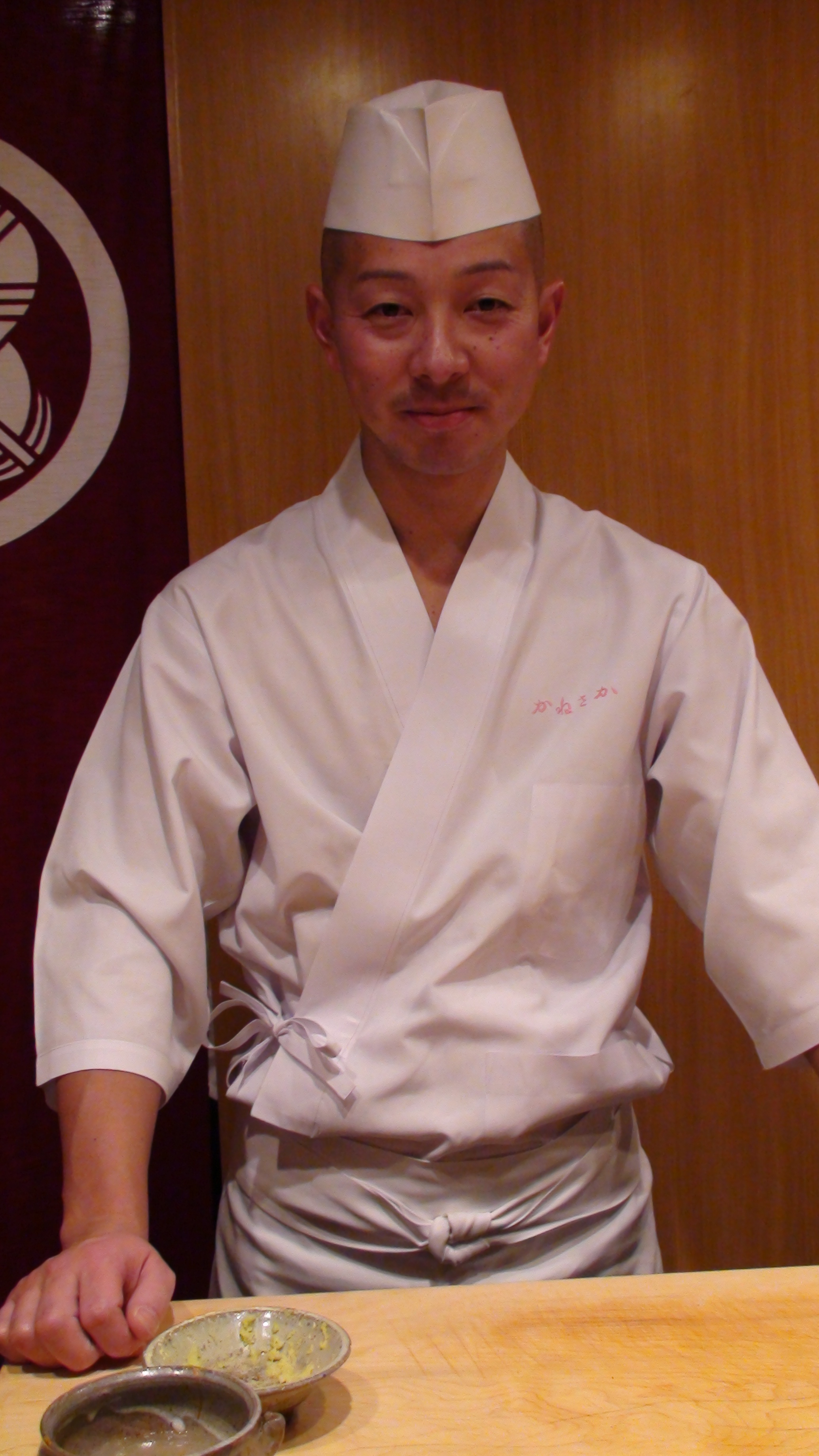

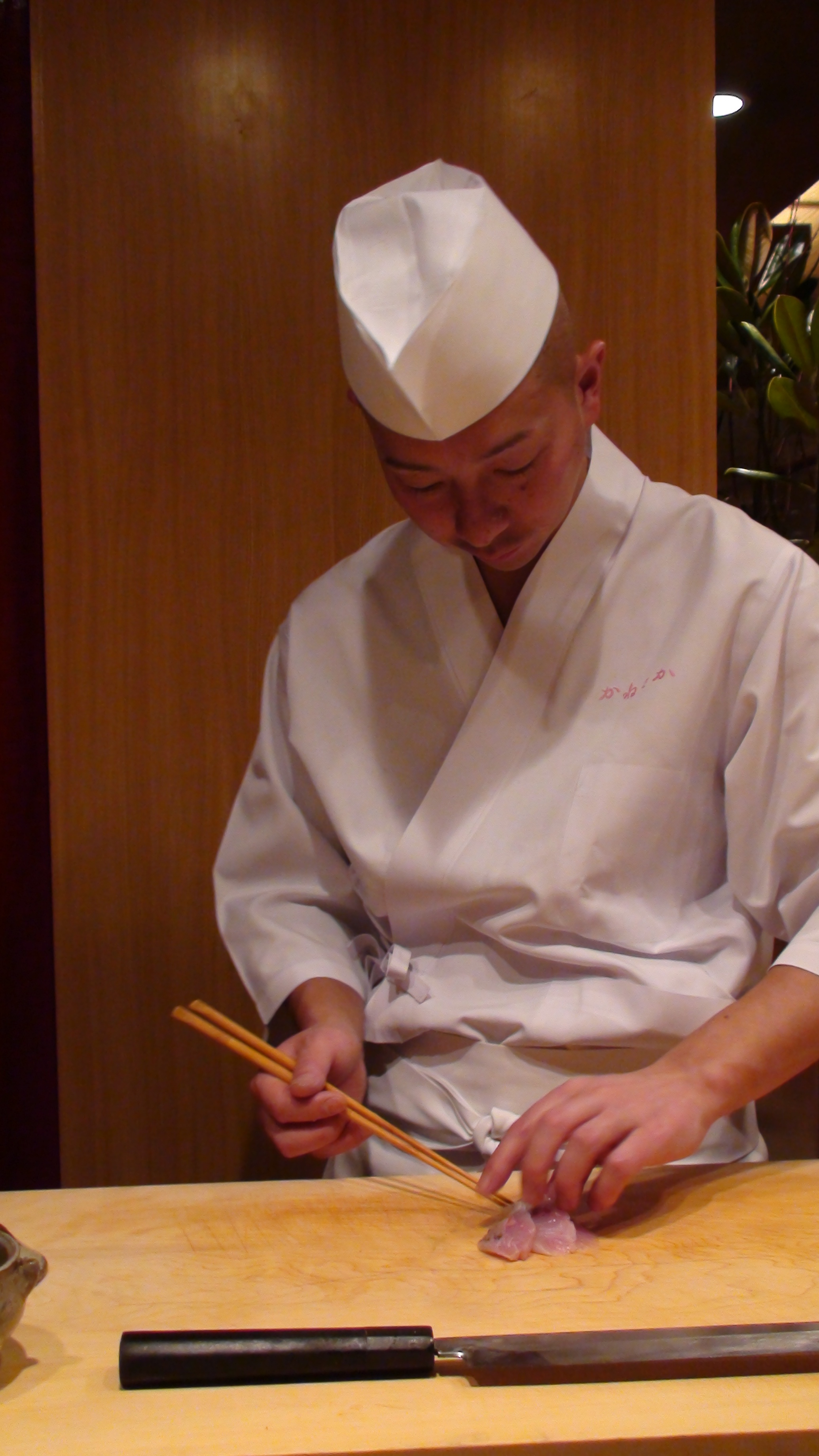

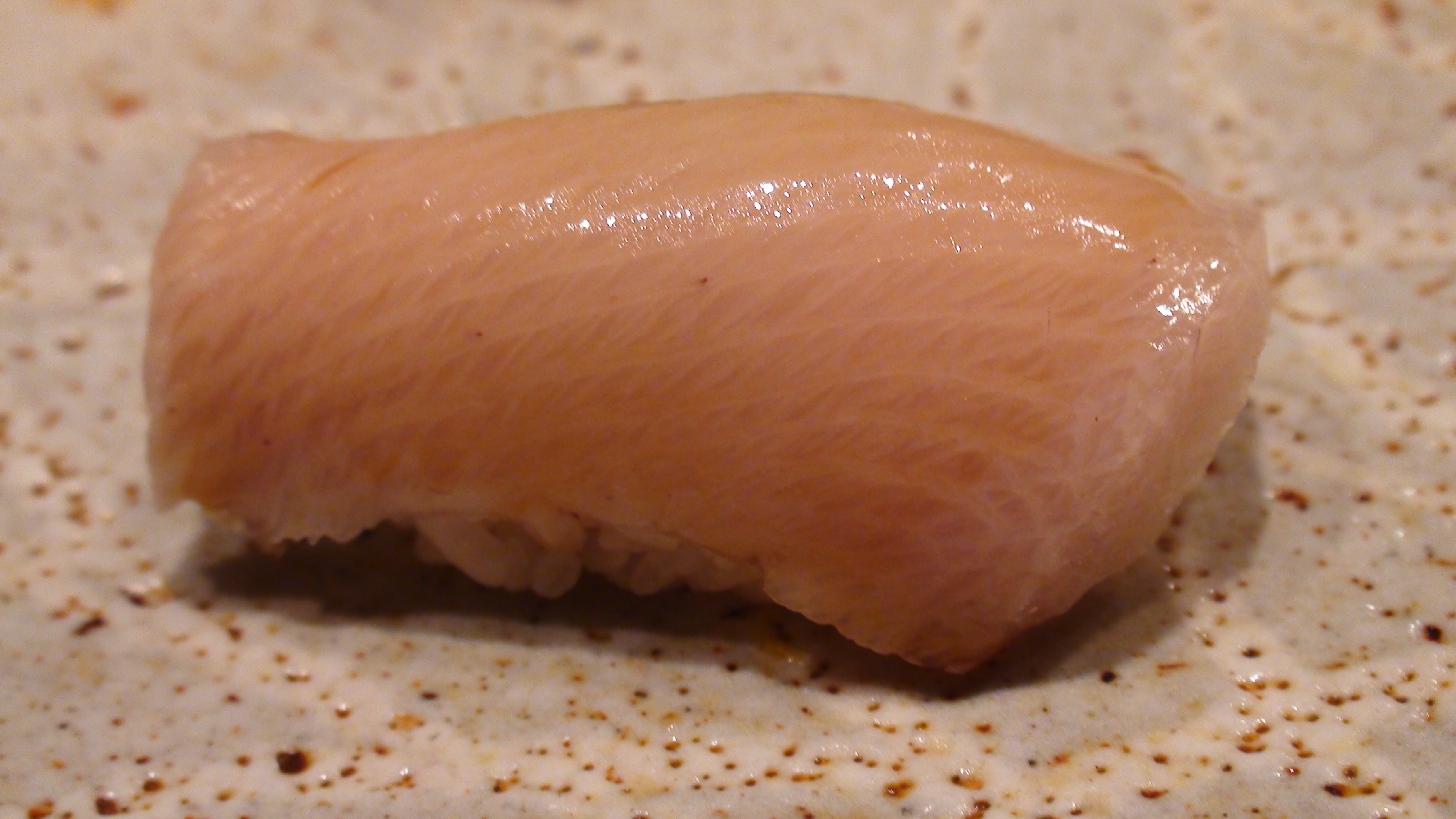
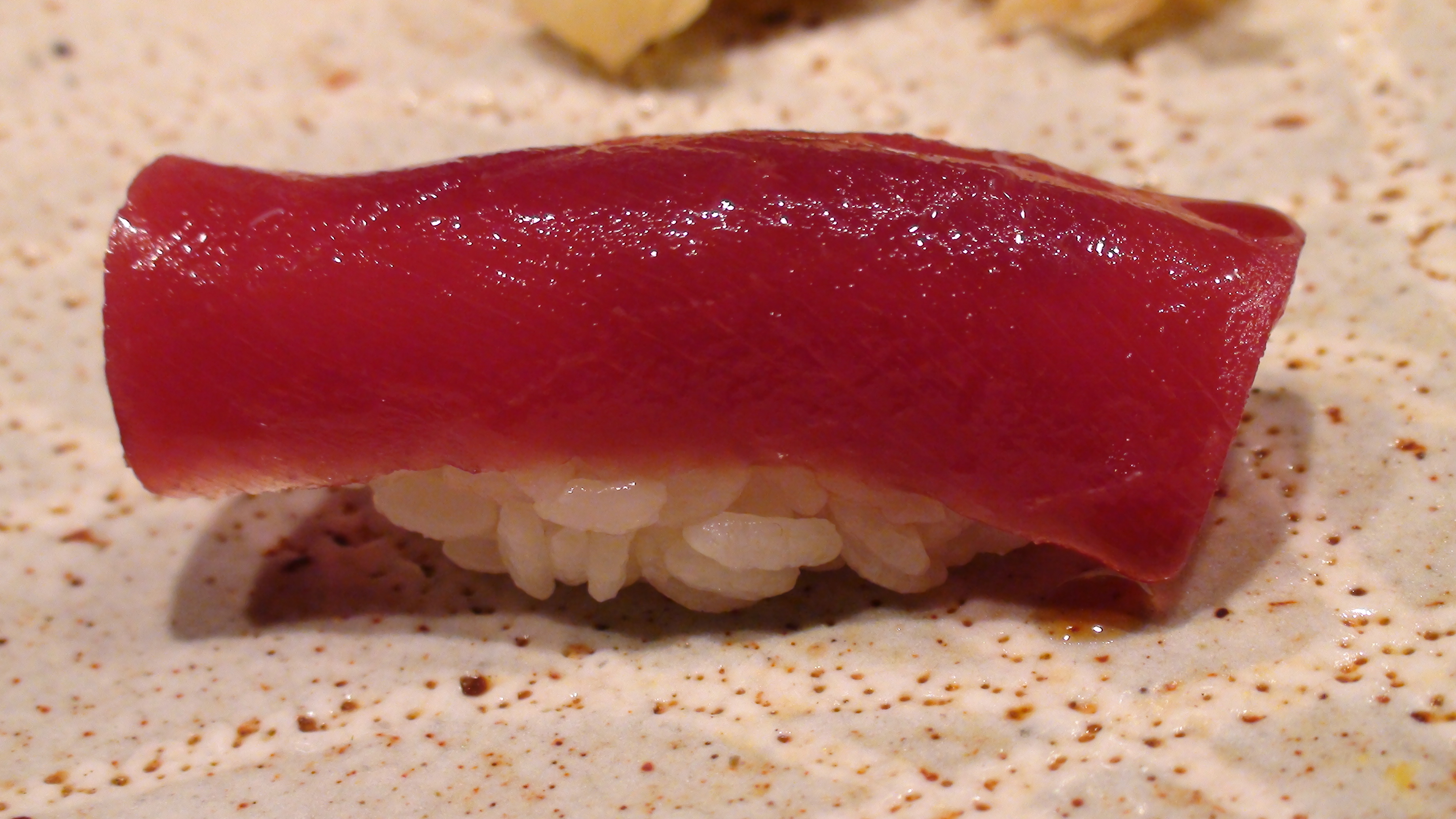
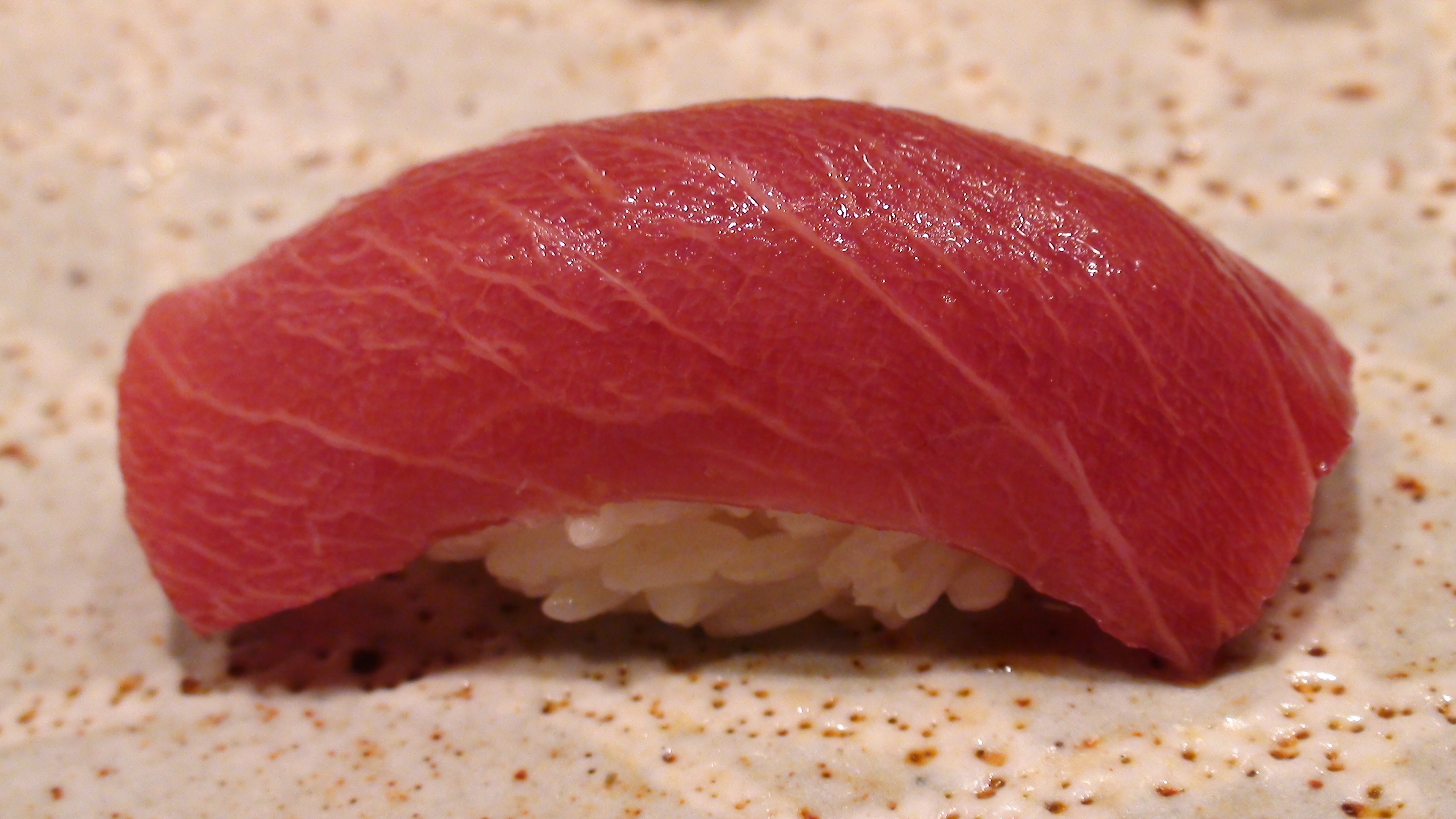
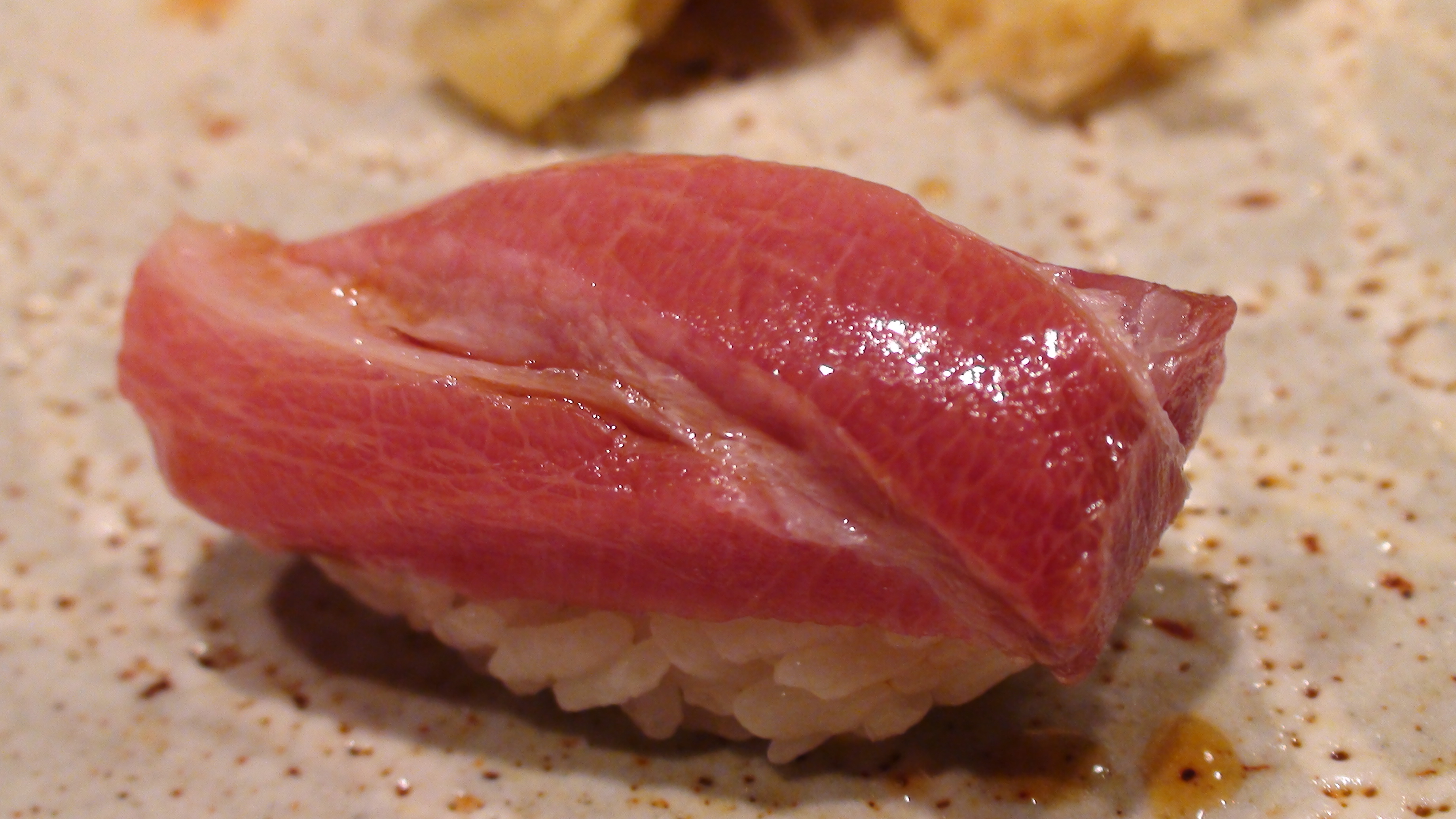

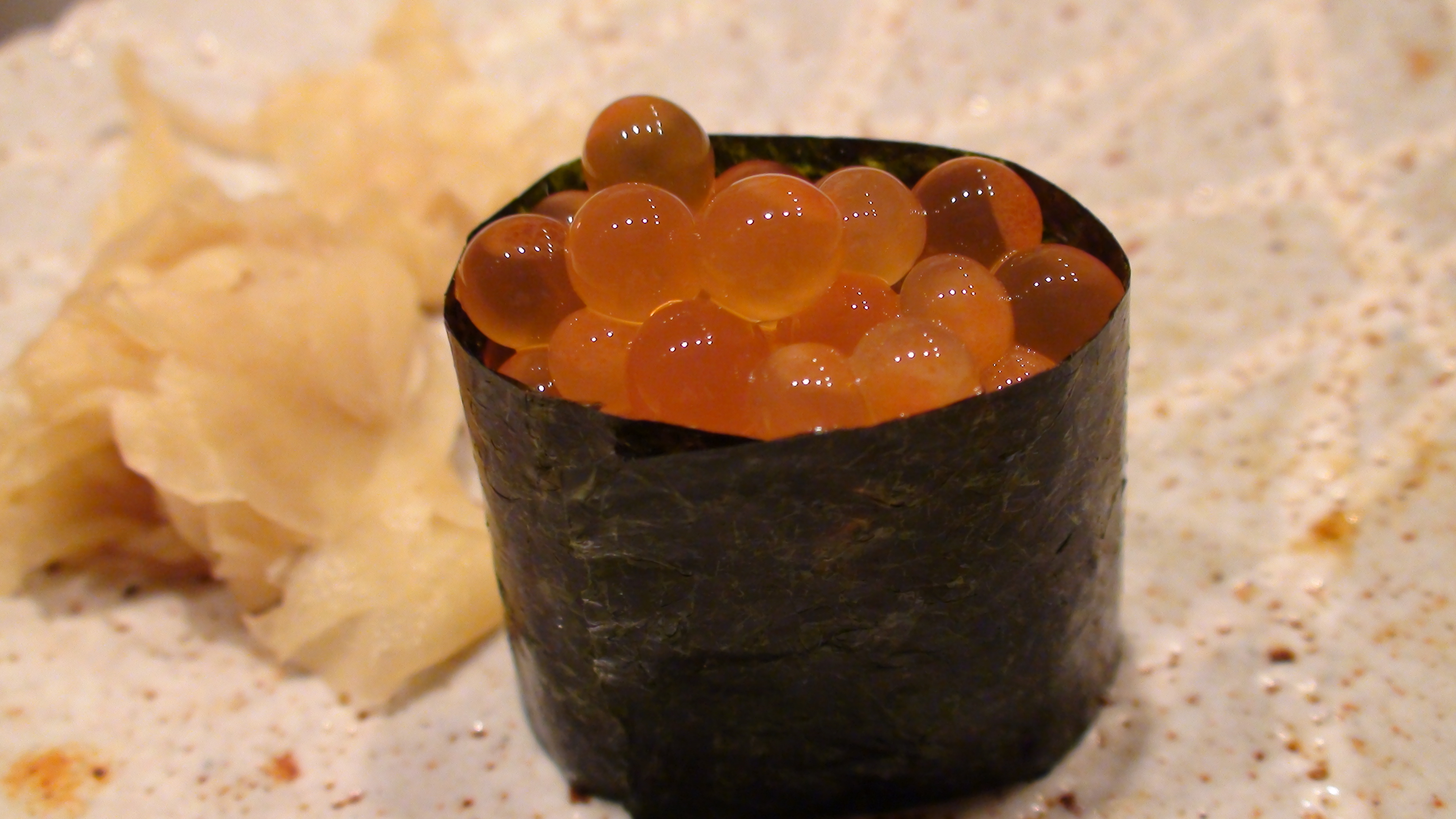
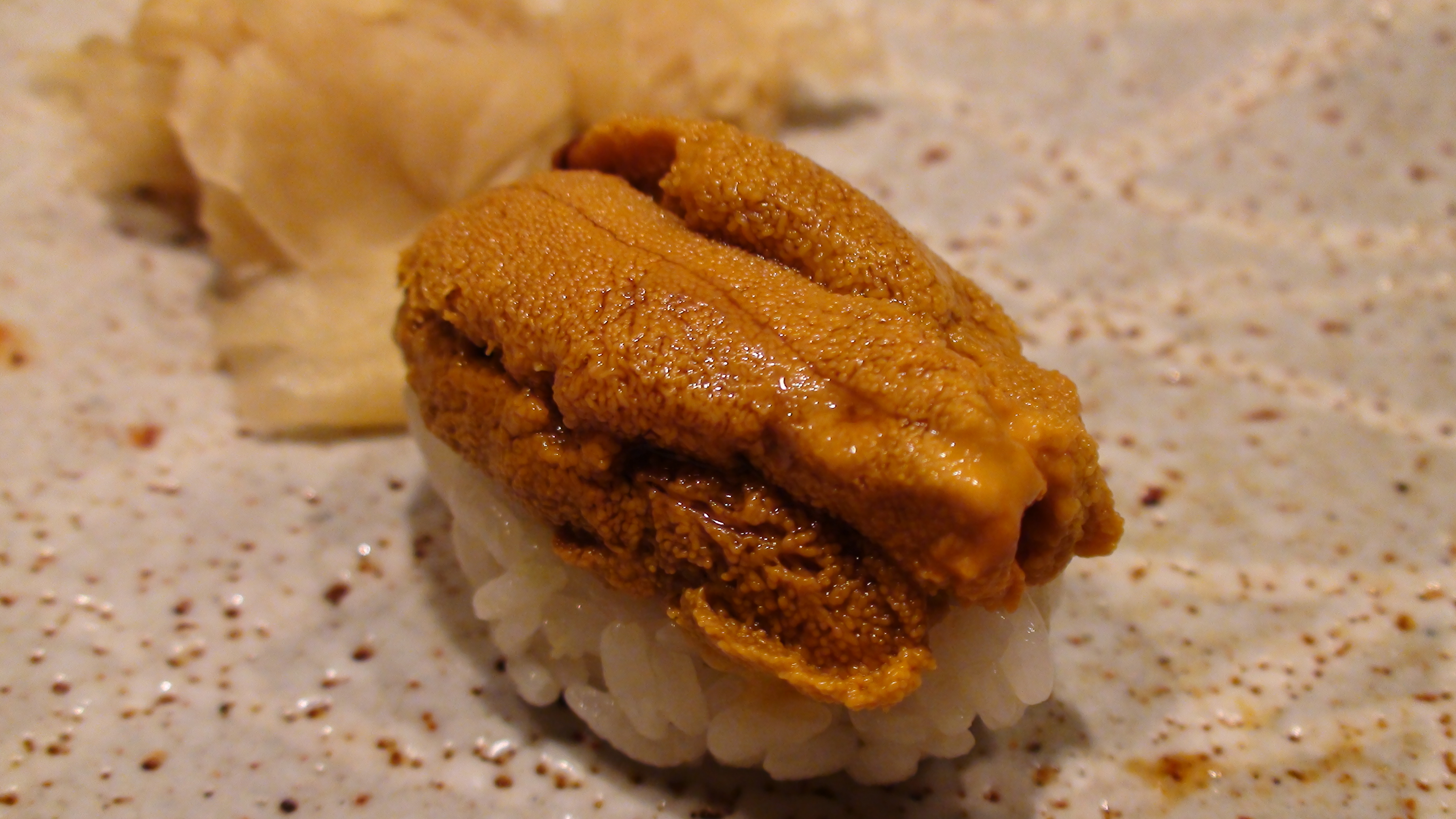

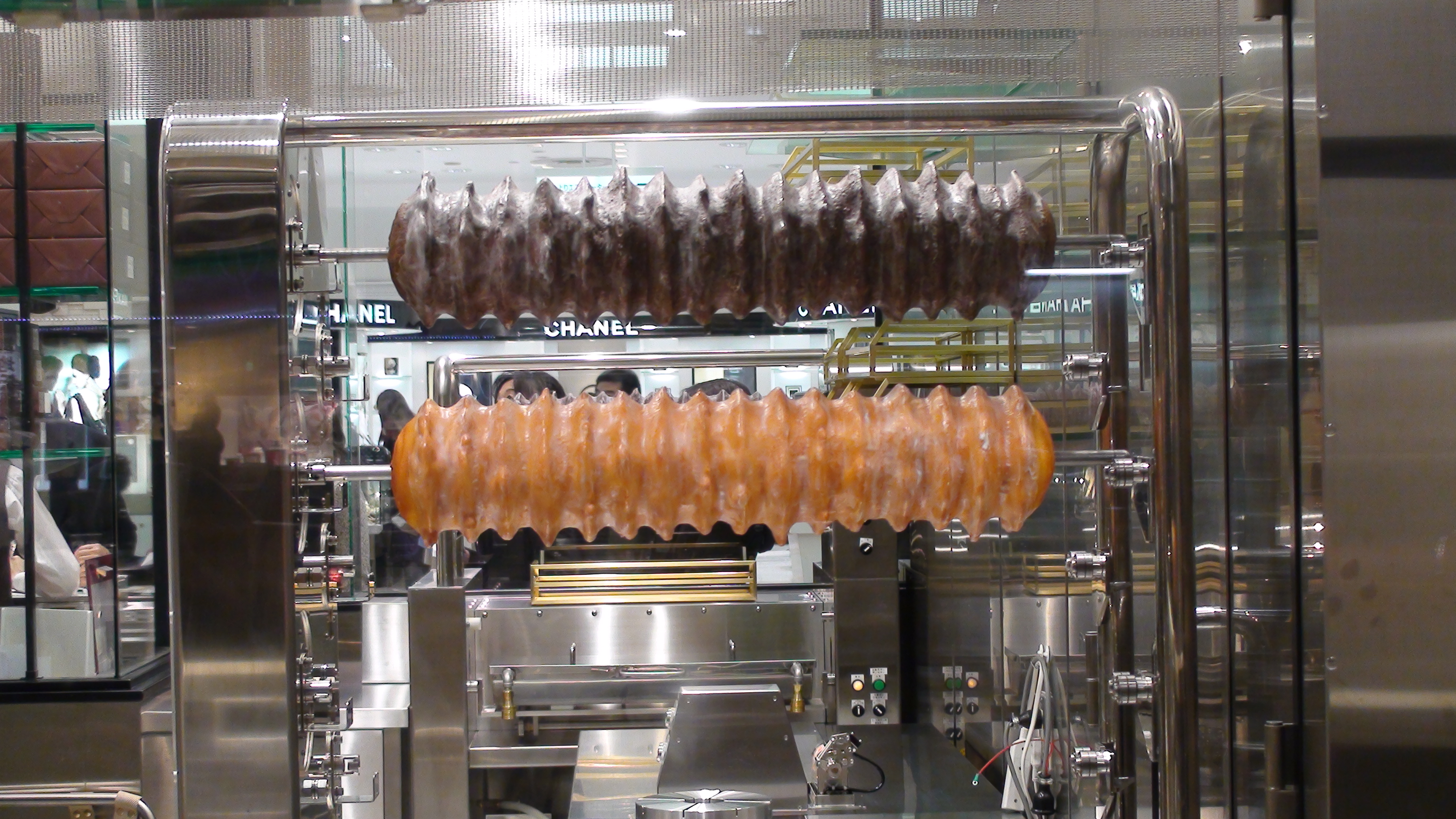
Well, that’s that. Today marks the end of my culinary expedition to Tokyo and, last night, I closed it out in fine style with a return visit to Sushi Kanesaka. As I was heading in, former Japanese Prime Minister Junichiro Koizumi was heading out, flanked by a security team that whisked him into one of two waiting cars and away. Chef Kanesaka again did the honors on this night, carving up his mouth-melting creations for us and happily chatting throughout. One of the things I most appreciate about the man, besides his mastery of sushi, is that he is almost always smiling, ever upbeat and personable. Jessica and I struck up a conversation with the two couples seated beside us and discussed food, travel, and the perils of eating mochi (a glutinous Japanese rice cake) that, the way they tell it, sounds even more dangerous than fugu. At the end of the night, we were heading up the stairs, talking about how much we enjoyed the restaurant and Chef Kanesaka in particular when, upon reaching street level, we turned and found Kanesaka-san standing behind us. He thanked us for visiting and presented us with gift box containing what he termed his “special seaweed”. A short walk to the subway and Jessica presented me with yet another going away gift box, this one containing colorful Japanese desserts before heading off for the last time.
I packed, made arrangements for the departure, then sat back and took stock of my trip, and my special dinners in particulars. All told, I visited some Michelin 3 star restaurants, some Michelin 2 star restaurants, and a couple of places recommended by the hotel. So, how did everyone do?
BATTLE TEPPANYAKI: UKAI-TEI VS. MORIMOTO XEX
Décor: Ukai-Tei’s “classic” interior made me feel as though I was having dinner at my eccentric aunt Gladys’s home, while Morimoto XEX captured the chic sterility of a German techno dance club. Verdict: Tie.
Food: Both very good, especially when it came down to the big ticket Kobe, but some of Morimoto XEX’s appetizers were so small they were downright miniscule. Verdict: Edge to Ukai-Tei.
Service: Good service but while Morimoto XEX was fairly austere (in and out with minimal contact) and our chef barely spoke two words to us (he probably didn’t speak English), the service as Ukai-Tei was a little friendlier due, in no small part, to our affable chef who was more than happy to discuss the various ingredients that went into the dishes (and, no, he didn’t speak English either). Verdict: Edge to Ukai-Tei.
Price: Egads! My meal at Ukai-Tei was the most expensive I had in Tokyo! Still, even given the portions and the quality of the meal… Result: Morimoto XEX.
Winner: Ukai-Tei.
Final Verdict: Sorry, no return visits to either. I enjoyed myself, especially at Ukai-Tei, but at the end of the day the price point would be enough to make me set my sights (and wallet) elsewhere.
BATTLE FRENCH: L’OSIER VS. CHATEAU JOEL ROBUCHON
Décor: Joel Robucon’s majestic chateau offers a truly one of a kind dining experience while L’Osier’s comparatively smaller room offers elegance and charm in its upscale setting and fun, almost playful décor. Verdict: Both were beautiful but I have to give the edge to Robuchon here. You’re eating dinner in a chateau!
Food: Robuchon had some mighty spectacular-looking dishes even if some failed to impress, but L’Osier’s plates were all winners, taking home the awards in both taste and presentation. Verdict: L’Osier.
Service: Some missteps at Robuchon where the service was cool and unobtrusive whereas L’Osier boasted the best service I received during my trip. Prompt, professional, and personable. Verdict: L’Osier.
Price: Clearly, these prices aren’t for the faint of heart but, that said, both restaurants were comparable. Still, for quality of the meal… Verdict: L’Osier.
Winner: L’Osier.
Final Verdict: To be honest, I would return to Robuchon not for the food but for the place itself which provides a wonderfully romantic setting (should I ever convince Fondy to join me). Otherwise, I’d save myself the trip and go back to L’Osier. Twice.
BATTLE KAISEKI: HAMADAYA VS. RYUGIN VS. KIKUNOI VS. KANDA
Décor: Both Kanda and Kikunoi offer counter seating, although Kikunoi does have the added bonus of a rock garden vista through the bay window directly behind the working chefs. Ryugin offers a more modern table setting in keeping with its contemporary spin on the traditional kaiseki. Hamadaya, meanwhile, approximates the look and feel of a Kyoto ryokan. Once you step through those sliding doors, it’s as if you’ve left the frenetic city for the placid countryside – the perfect kaiseki setting. Verdict: Hamadaya.
Food: Hmmm, this one is a tough one. Hamadaya offers clean simplicity, which is nice – but, in comparison, the other three fairly blow it out of the water. Looking back, there were some stand-out dishes at all of the remaining three – the blackthroat perch at Ryugin, the grilled crab at Kikunoi, the hairy crab meatball at Kanda. Verdict: Let’s call it a three-way tie.
Service: Excellent at all four. Ryugin’s table service was pleasant and professional while, at Hamadaya, we were served by the owner’s daughter who would slip quietly into our private room to see to our needs and then slip away just as quietly. Chef Kanda was a pleasure to chat with while I loved the fact that the Kikunoi staff took the time to pull out the English-language version of their cookbook and inform us on what, exactly, we were eating. Verdict: Four way tie.
Price: Kaiseki is expensive and when it comes to Tokyo kaiseki, these four places are as expensive as they get. Verdict: Another four way tie.
Winner: It’s impossible to pick a winner here. Although…
Final Verdict: While I enjoyed the setting offered by Hamadaya, it was atmosphere over food and so I honestly don’t think I’d make a return visit. Kikunoi, Kanda, and Ryugin – yes, I would.
BATTLE SUSHI: MIZUTANI VS. SUSHI KANESAKA
Décor: Both are fairly tiny basement restaurants offering counter service only. Verdict: Tie.
Food: Mizutani was very good, but Sushi Kanesaka was out-of-this-world. Best Sushi Ever! Verdict: Sushi Kanesaka.
Service: Again, service was good at both places but Chef Kanesaka’s warmth and open disposition made both visits here truly memorable experiences. Verdict: Sushi Kanesaka.
Price: Mizutani was about two-thirds the price of Sushi Kanesaka and yet, I would happily pay extra for Chef Kanesaka’s sushi.
Winner: Sushi Kanesaka.
Final Verdict: While I did enjoy Mizutani, I don’t think I’d make a return visit simply because I’d probably like to check out any of Tokyo’s numerous other fine sushi restaurants. As for Sushi Kanesaka – it will no doubt be my first stop on my trip back.
Finally, in closing, I’d like to thank the people I’ve met and the friends I’ve made over the course of my stay here in Tokyo, those who took the time to join me on some excursions, filled me in on the local scene, and accompanied me to dinner: Yuka, Mahesh, Richard, Kaori, Mark, Sayeh, Valentine, Claire, Tomoko, Moro, Keiko, Kay, and, especially, Jessica my more-often-than-not partner in culinary pursuits. And an extra special thank you to the Tokyoites who helped make my stay most enjoyable by either helping to facilitate restaurant reservations, allowing me to photograph and pet their dogs, or simply chatting with me despite my suspect Japanese language skills. Finally, thanks to all you readers who came along and kept me company by posting comments.
Sayanora and see you on the other side!
Of the world!


Leave a Reply